
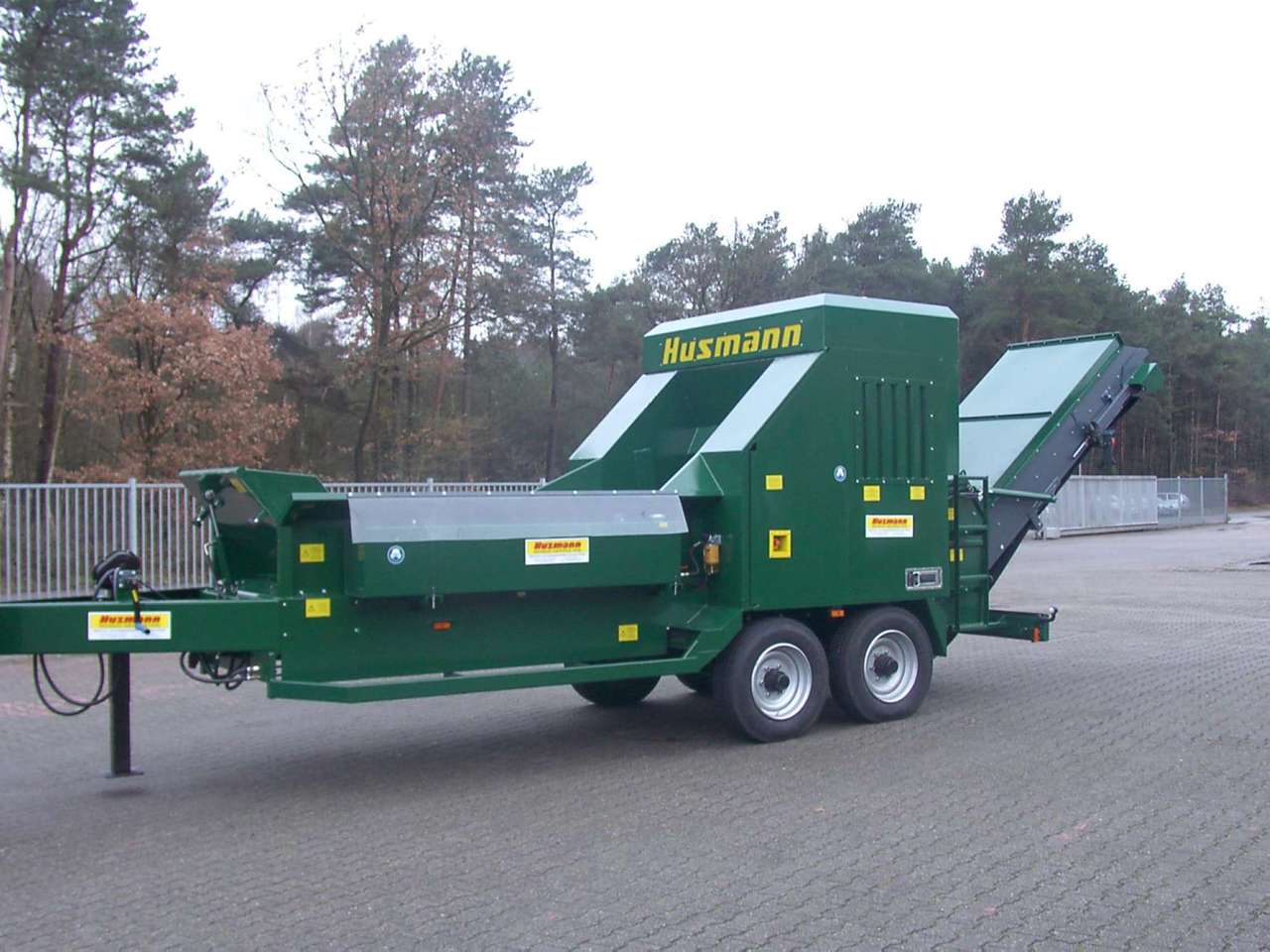
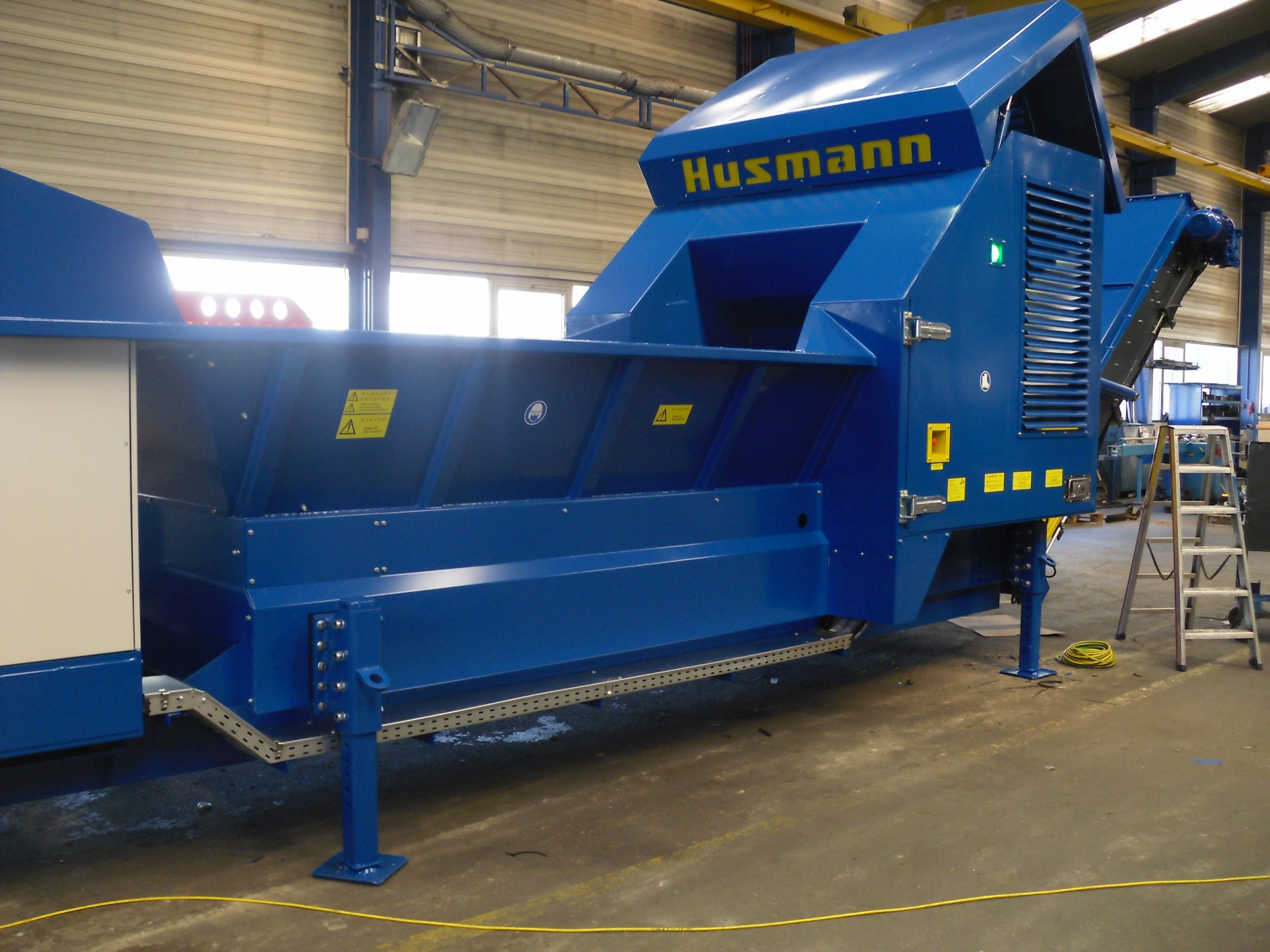
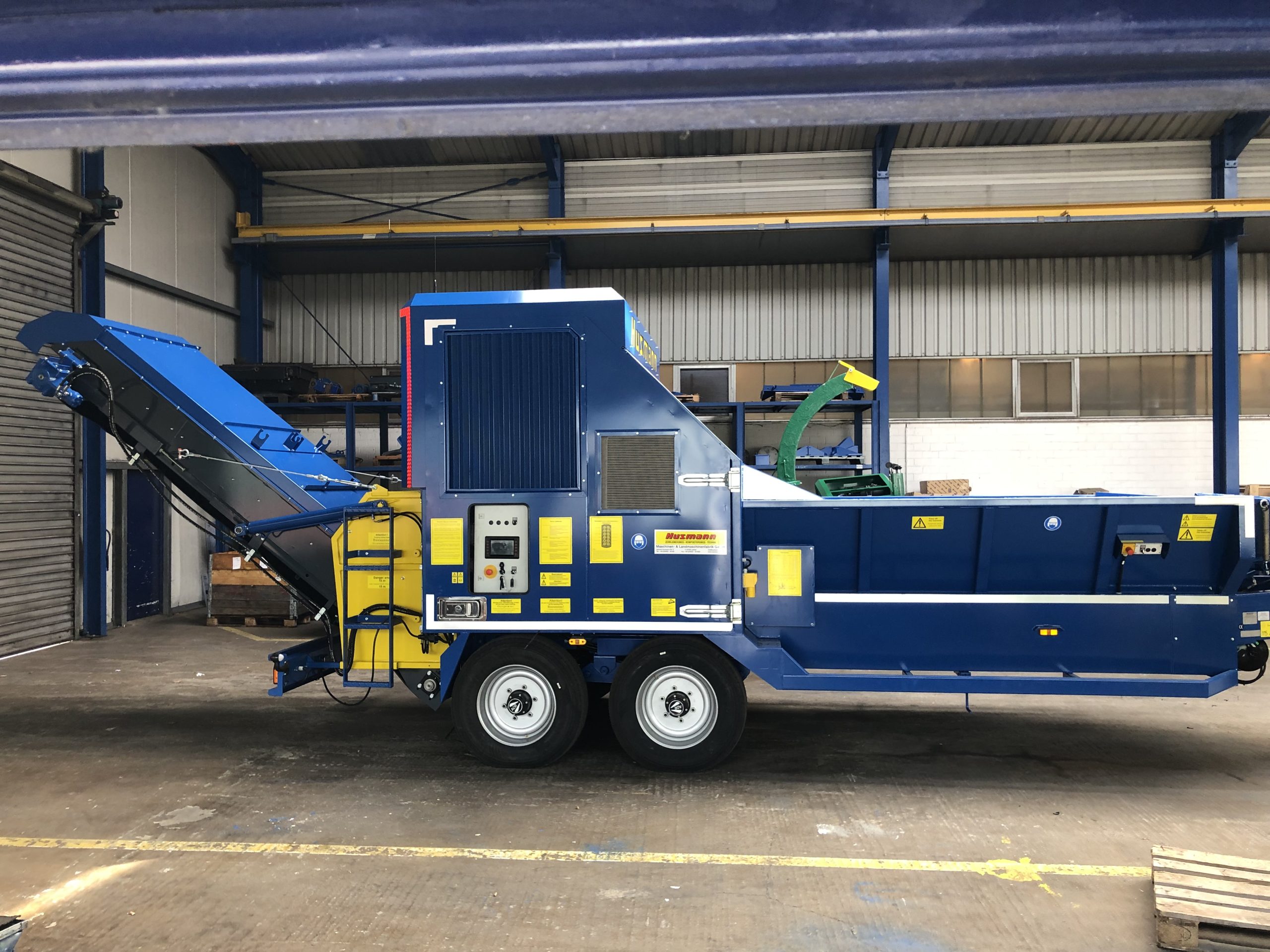
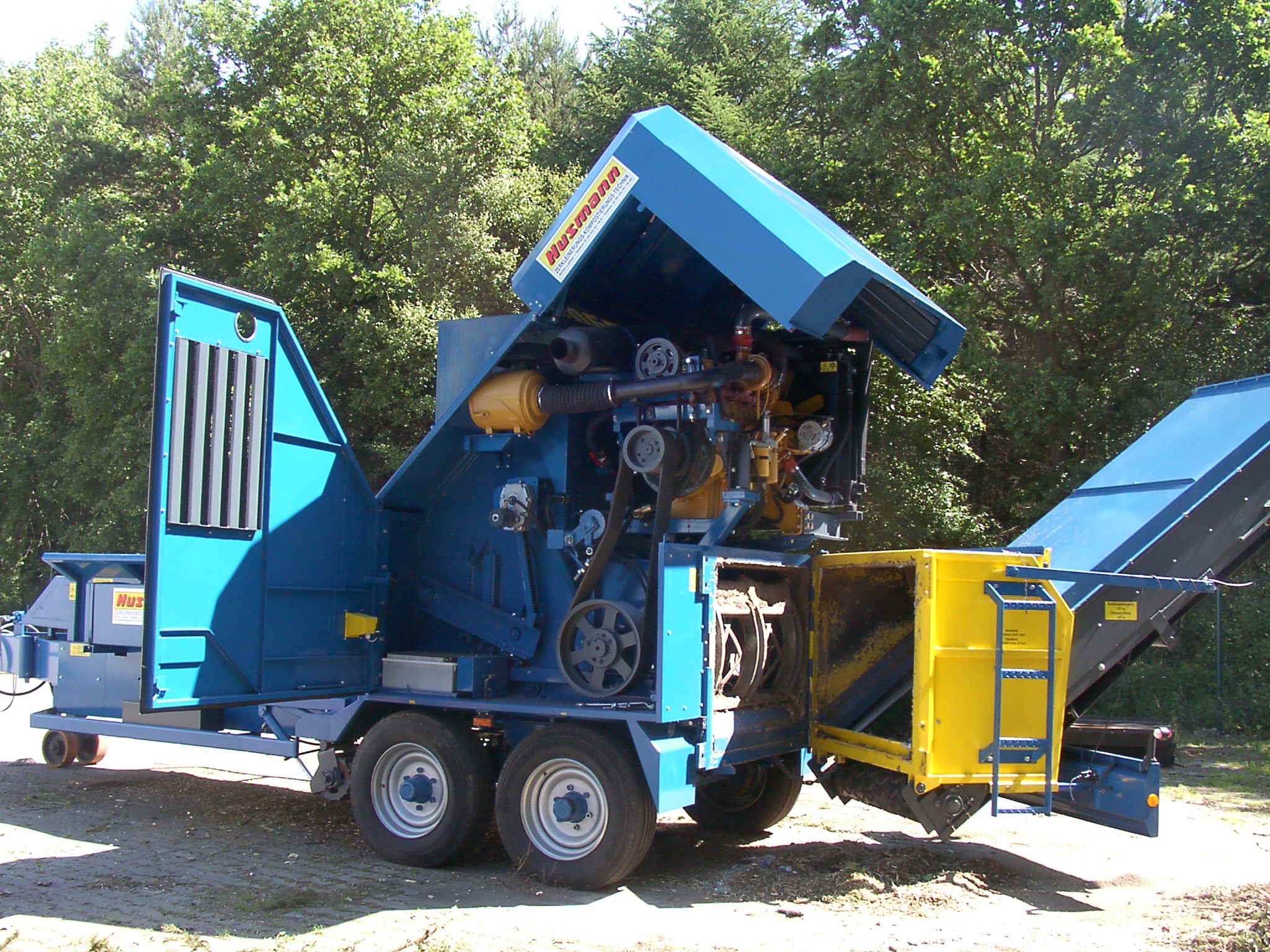
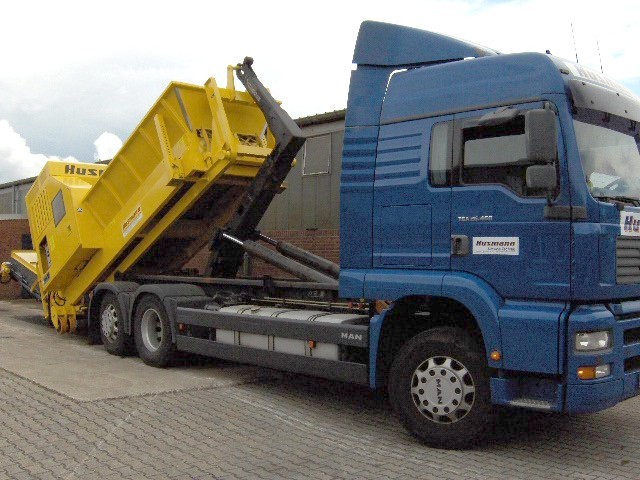
HFG IV With Hook Lift Holder


Recommended For businesses

Mine Sites
Logistics Companies
Warehouses
Manufacturers
Councils
Waste Transfer Stations
Benefits of the HFG IV
Specifications
- The HFG series starts in the smaller version with the HFG I, through the HFG II to the HFG VI.
- The machine types are equipped with and achieve a drive power of up to 556 kW.
- Reduction of waste volume.
- Shredding directly on site .
- Reduction in landfill volume.
- Recycling the shredded material.
- Economic efficiency through “one-man operation”.
- Reducing waste disposal costs.
- Drive power (kW) : 205 .
- Total weight depending on equipment (kg) total. 11,500 .
- Loading height (mm) ab 1.720 .
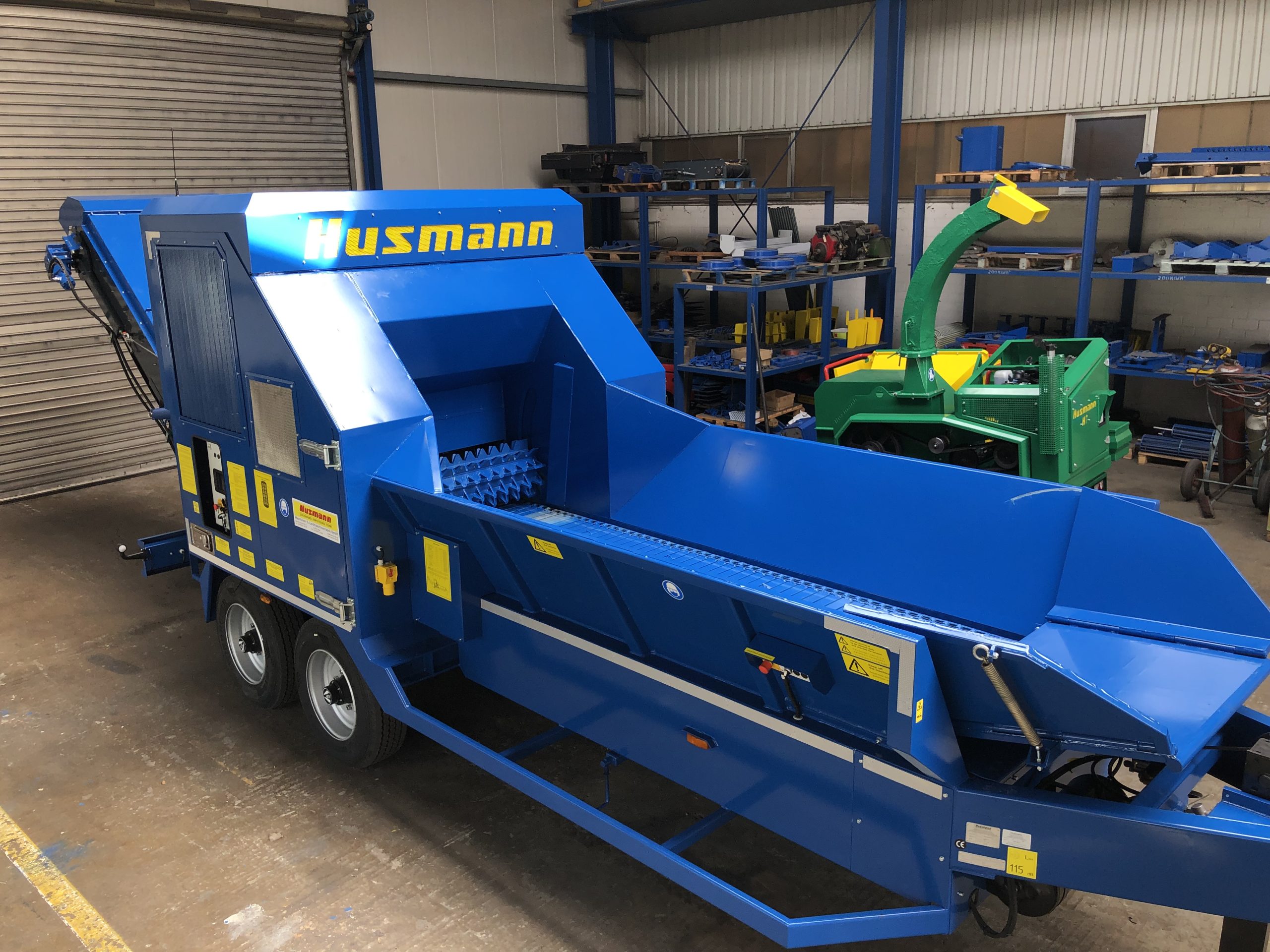
- Funnel opening (W x L) (mm) 2.000 x 3.600 .
- Feed opening (W x H) (mm) 1.230 x 400 .
- Striker width (mm) 1.230 .
- Schlegel (number) 60 .
- Ejection height conveyor belt (mm) 2.600 .
- Conveyor belt width (mm) 1.200 .
- Throughput (cbm/h) 25 to 50 .
- Machine dimensions with conveyor belt (L x W x H) (mm) 9.700 x 2.300 x 3.100 .
Specifications
- Drive power (kW) : 205 .
- Total weight depending on equipment (kg) total. 11,500 .
- Loading height (mm) ab 1.720 .
- Funnel opening (W x L) (mm) 2.000 x 3.600 .
- Feed opening (W x H) (mm) 1.230 x 400 .
- Striker width (mm) 1.230 .
- Schlegel (number) 60 .
- Ejection height conveyor belt (mm) 2.600 .
- Conveyor belt width (mm) 1.200 .
- Throughput (cbm/h) 25 to 50 .
- Machine dimensions with conveyor belt (L x W x H) (mm) 9.700 x 2.300 x 3.100 .
HFG IV With Hook Lift Holder
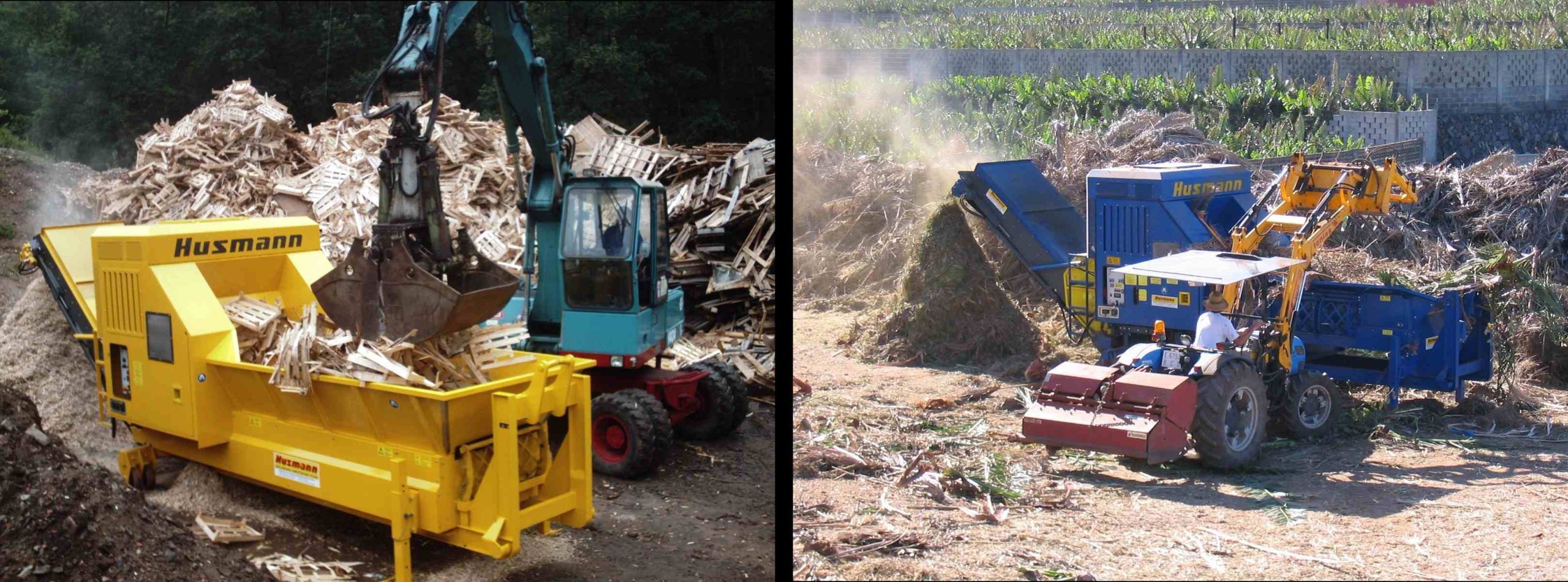
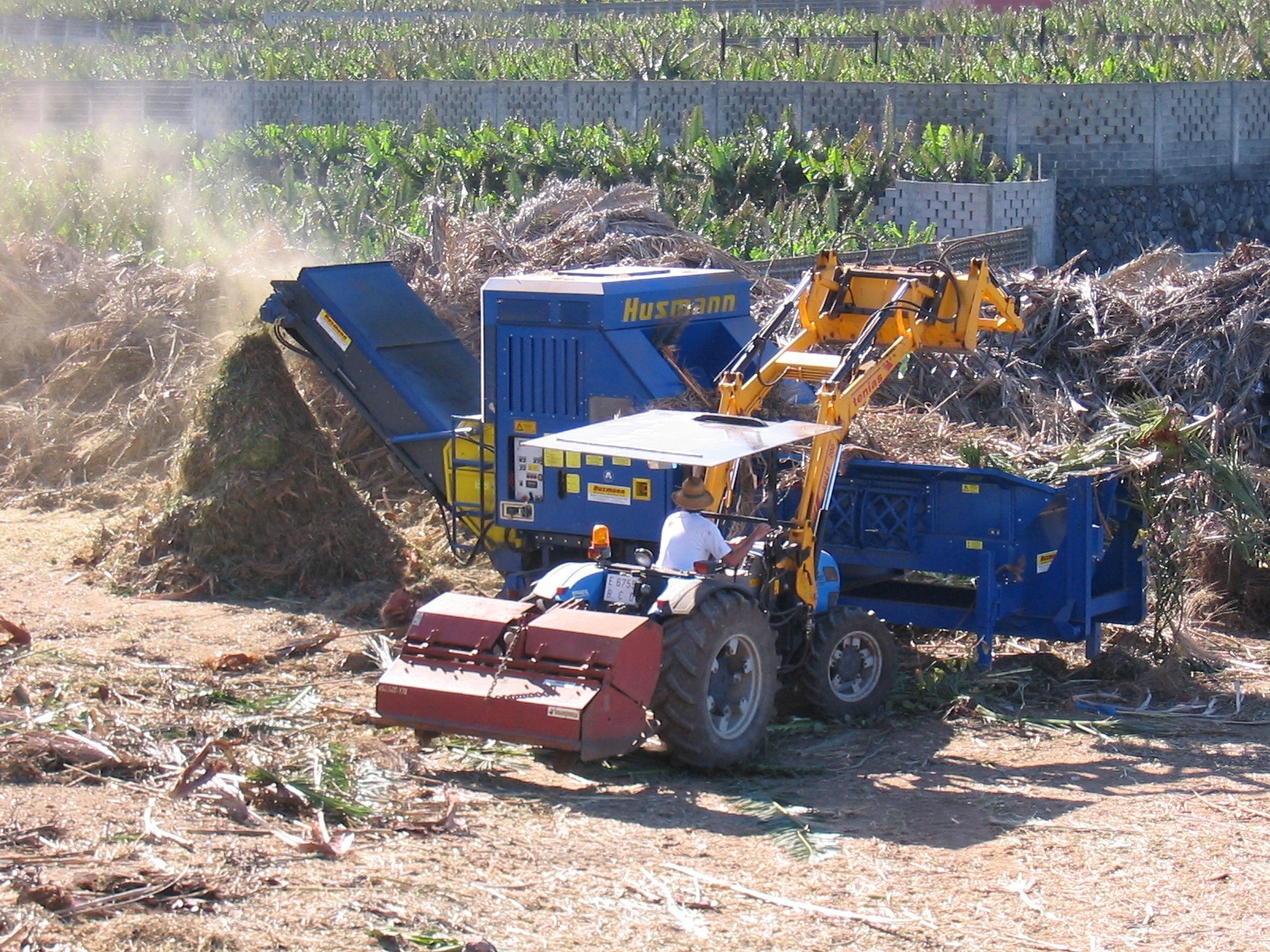
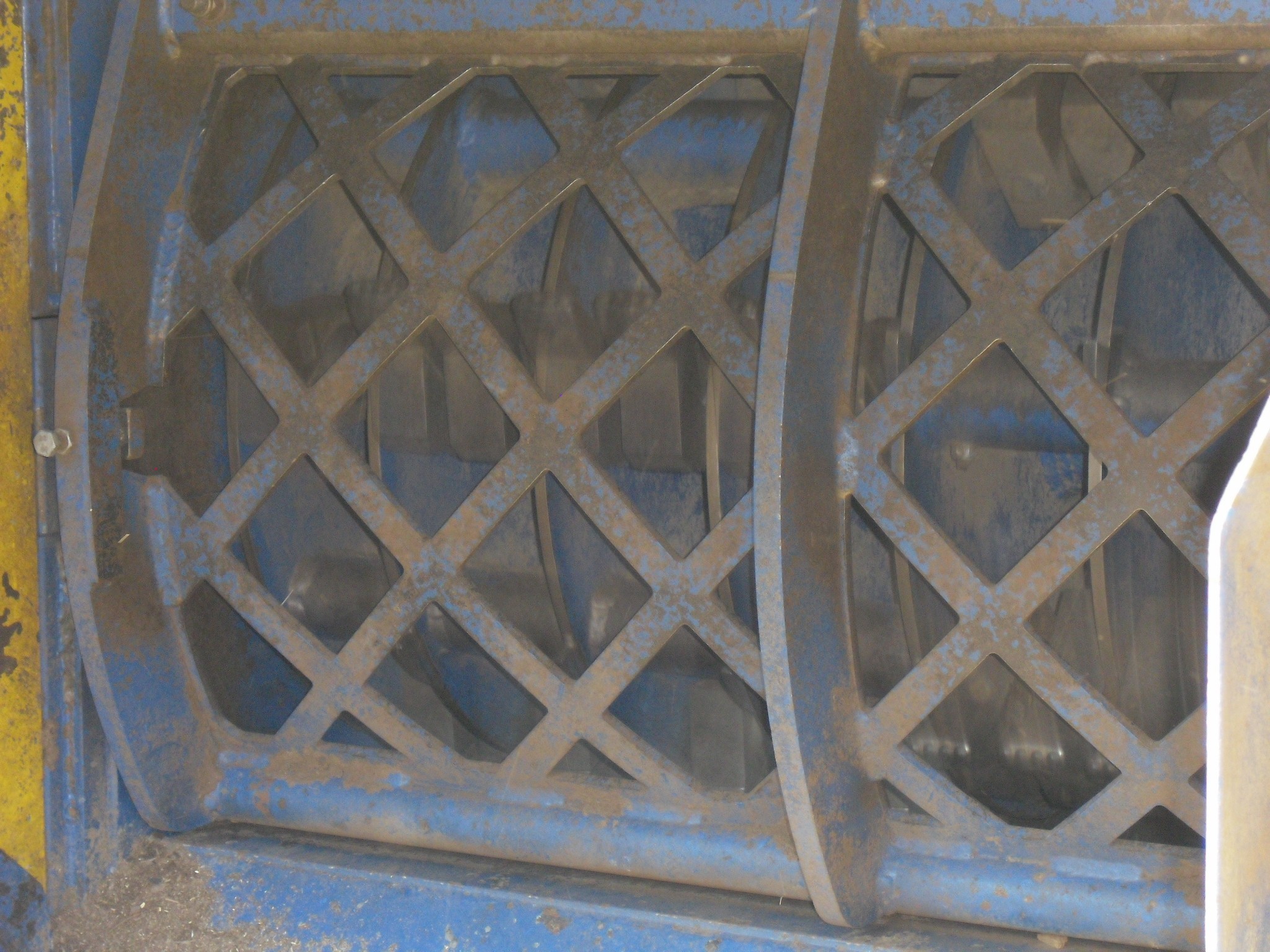
These powerful Smart Waste devices with the basic name “HFG ” achieve an even, fine and clean shredding. The shredding machine, equipped with free-swinging hammers, has optimal power-Implementation for high throughput and energy utilization through impact transmission a breaking edge.
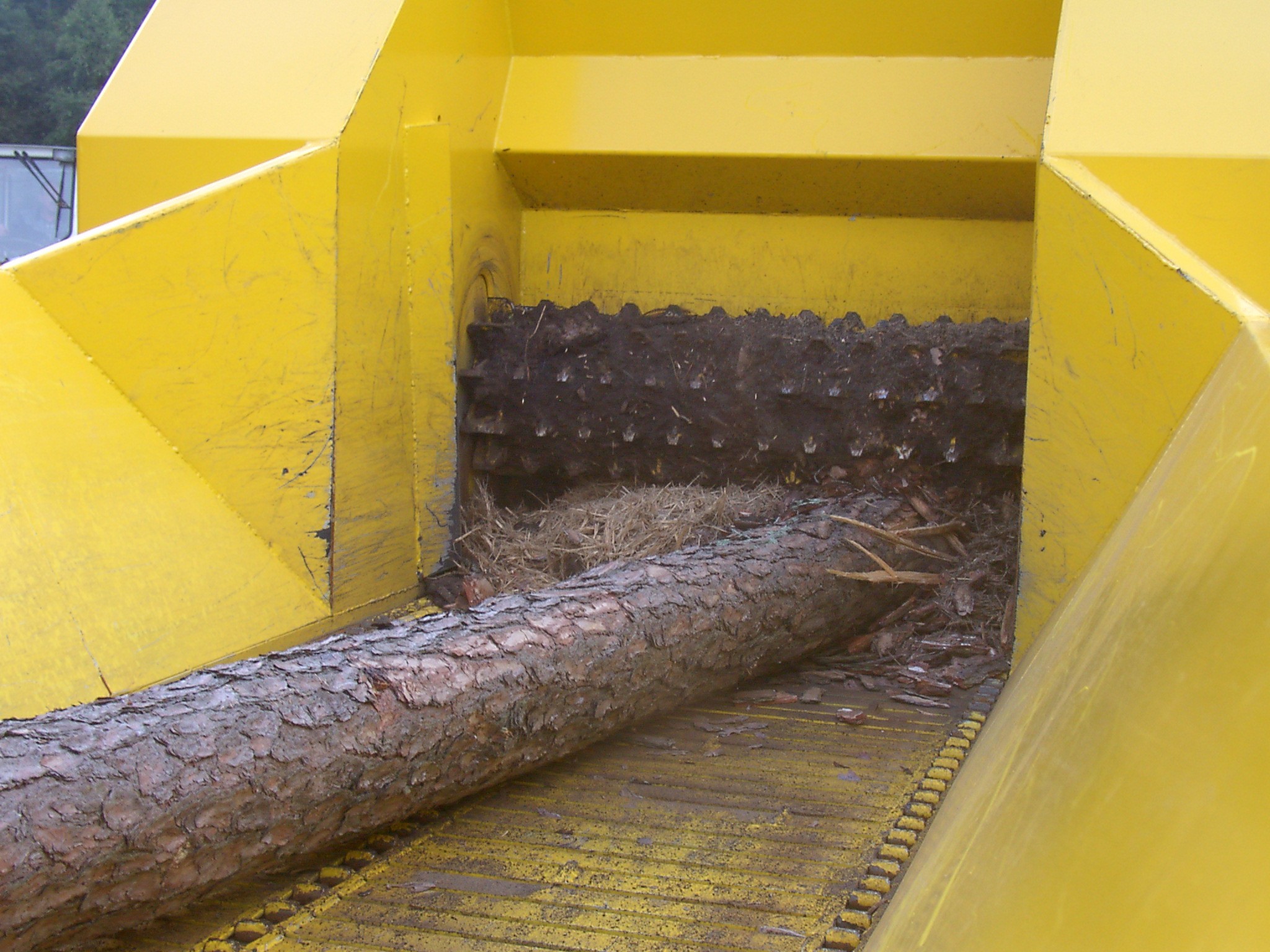
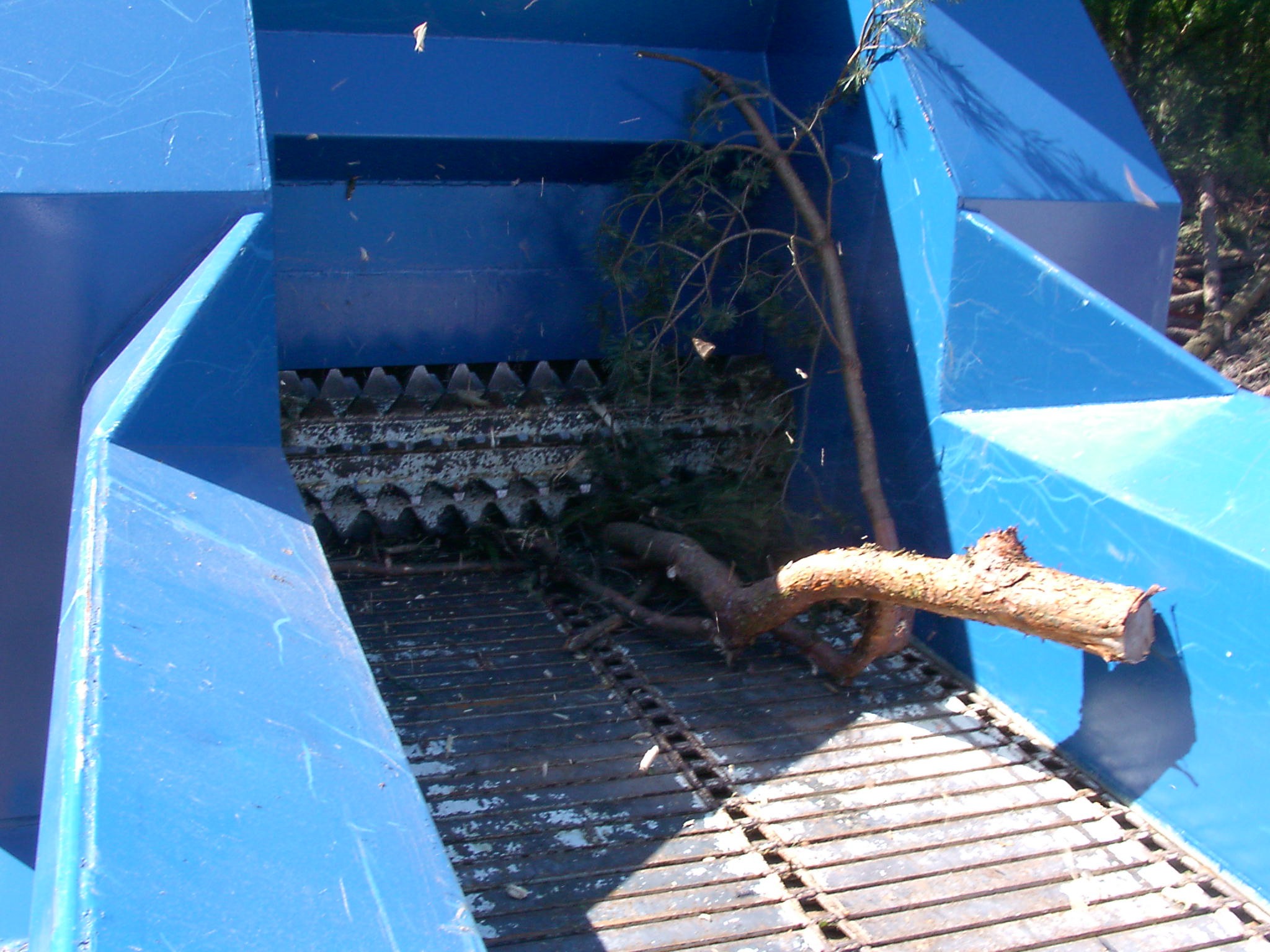
This ensures homogeneous comminution of the supplied material without the need for time-consuming subsequent processing. shredding guaranteed. The impact technique causes the material to be shredded, such as: B. green waste and tree trunks, defibers and is ideal for composting.
The HFG series starts in the smaller version with the HFG I, through the HFG II to the HFG VI. The machine types are equipped with and achieve a drive power of up to 556 kW Throughput rates of up to 250 cbm per hour.
Need a different size? See our Larger and Smaller models
Check out our Collection Systems


Select another category


FAQ for for Industrial Large Shredder HFG IV LS: Commercial FAQs & High-Capacity Biomass Processing Guide
The Large Shredder HFG IV LS is a high-speed, high-throughput industrial hammer mill and biomass shredder designed for regional composting yards, municipal green waste facilities, land-clearing contractors, and industrial biomass plants.
Positioned as an upgraded, higher-capacity evolution of the HFG II LS, the HFG IV LS incorporates a wider infeed intake, an enlarged heavy-duty flail rotor, and higher-output industrial powertrain options. It is engineered to process massive volumes of green waste, whole root crowns, large-diameter tree trunks, and contaminated pallet scrap with continuous, multi-shift reliability.
- Rotor Assembly: Dynamically balanced, extra-wide high-inertia impact rotor fitted with heavy-duty, free-swinging reversible alloy flail hammers.
- Drive Power Rating: High-output industrial turbo-diesel engine or multi-motor electric drive configuration delivering 350 kW to 450+ kW (approx. 470 HP to 600+ HP) of continuous crushing power.
- Infeed System: Extended steel slat floor conveyor paired with an aggressive, hydraulically driven floating top roller with down-pressure boost.
- Throughput Capacity: Industrial throughput processing between 80 and 150 m3 per hour (depending on input bulk density and material moisture content).
- Discharge Geometry: High-reach hydraulic folding conveyor belt offering discharge heights over 4.5 meters for maximum conical stockpile heights or high-sided bulk walking-floor trailers.
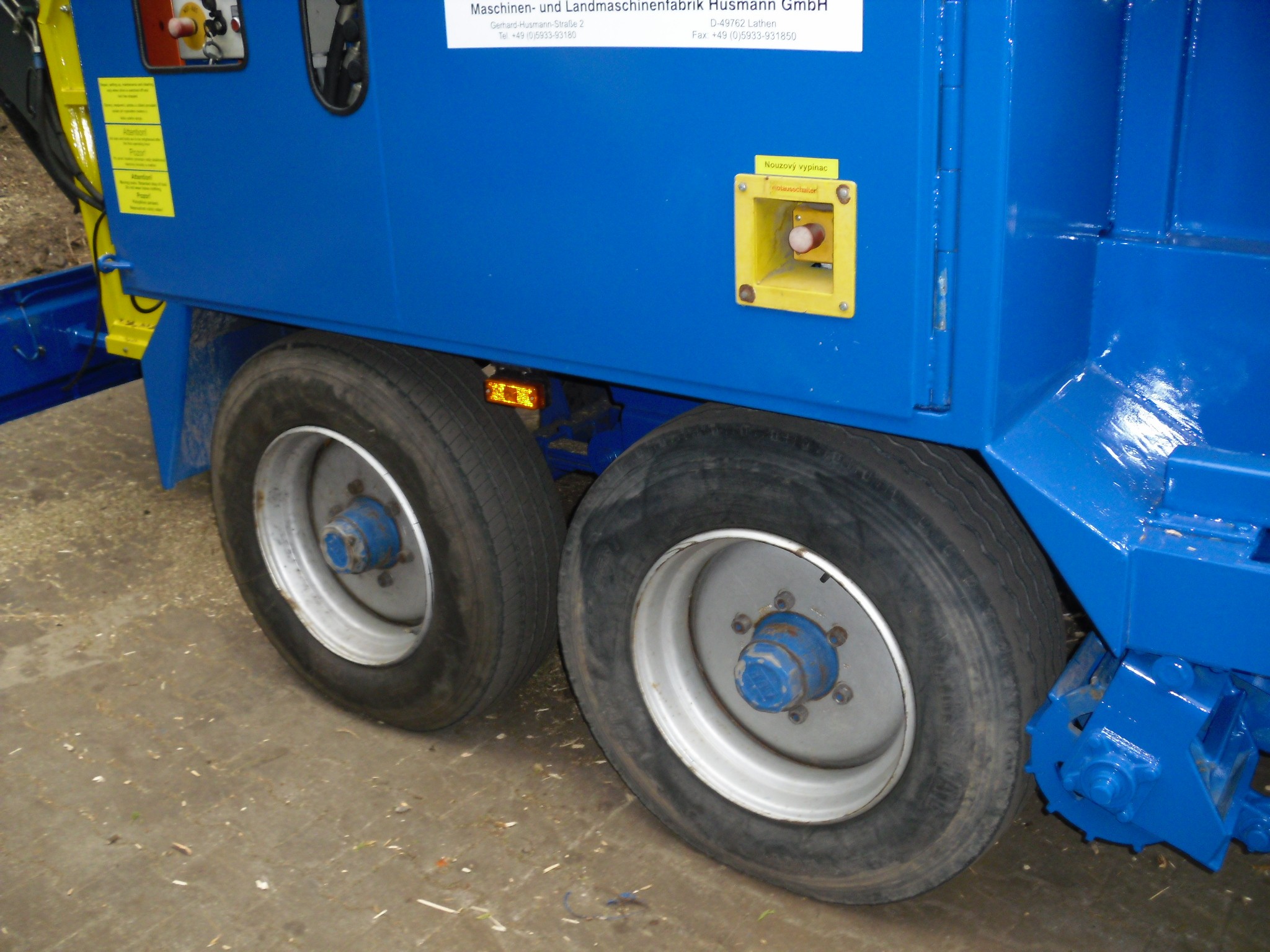
- Chassis Configuration: Heavy-duty multi-axle road trailer with ABS braking systems, or an all-terrain steel crawler track undercarriage.
- Throughput & Capacity: The HFG IV LS nearly doubles the volumetric processing capacity of the HFG II LS, yielding up to 150 m3/h compared to 40–80 m3/h on the smaller unit.
- Powertrain & Torque: Powered by 350–450+ kW heavy industrial engines (compared to 175–260 kW on the HFG II LS), providing the extra kinetic energy required for dense hardwood logs, bulky root balls, and continuous conveyor feeding.
- Wider Infeed Opening: The enlarged infeed throat accommodates wide branch canopies, bulky root flares, and whole industrial timber crates with minimal operator repositioning.
- Heavy-Duty Chassis & Suspension: Fabricated with reinforced chassis cross-members and high-capacity suspension to withstand higher vibratory impact forces during sustained large-log shredding.
The HFG IV LS is built to tackle high-volume, challenging organic and wood streams:
- Whole Tree Trunks & Canopies: Large-diameter hardwood trunks, broad-canopied eucalyptus branches, and storm-damaged vegetation.
- Root Balls & Stump Waste: Excavated tree stumps, root crowns with dirt inclusions, and land-clearing debris.
- Bark & Forestry Residue: Thick sawmill bark, forestry harvest residue, logging slash, and slab timber.
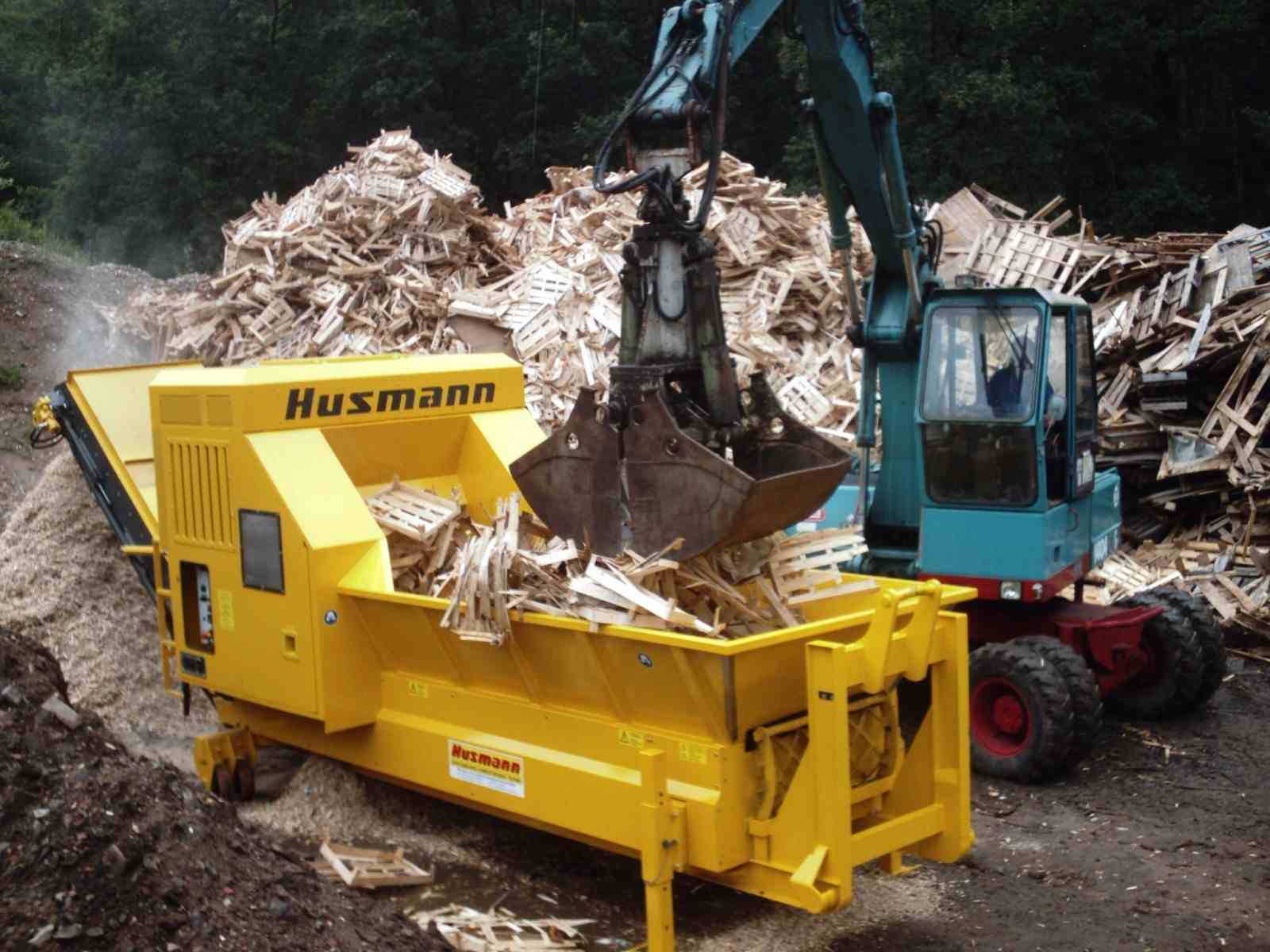
- Industrial Pallets & Demolition Wood: Nail-embedded shipping pallets, timber packaging crates, dunnage, and untreated construction timber.
- Green Waste for Composting: Mixed municipal garden organics, prunings, and fibrous palm species requiring aggressive defibration.
The high-speed free-swinging hammers strike timber along the natural longitudinal fibers, creating an open, defibered structure:
- Maximized Composting Efficiency: The splintered, fibrous output maximizes accessible surface area for bacteria, moisture, and fungal colonies, substantially reducing windrow turnaround times.
- Biomass Fuel Preparation: Produces calibrated, high-surface-area wood fractions ideal for industrial biomass boilers and fluidized-bed energy-from-waste plants.
- Erosion Control & Premium Mulch: Yields interlocking, fibrous wood mulch that resists wind drift and water wash-off on roadside batters and civil embankments.
Large-scale land-clearing and municipal green waste frequently contain tramp contaminants such as fence posts, rebar, tow chains, and rocks:
- Free-Swinging Flail Action: The rotor hammers are mounted on hardened alloy pivot pins. If an unyielding steel object is struck, the hammer swings backwards into the rotor body, absorbing the shock without transferring catastrophic shear force to the main rotor shaft.
- Hydraulic Floating Feed Gate: The top feed roller can instantly float upward or reverse automatically if an oversized, uncrushable object enters the throat.
- Tramp Material Ejection Zone: Heavy foreign debris that passes the breaker zone is ejected into an integrated collection tray before reaching the discharge conveyor.
The machine complies with Australian Machine Safety Standards (AS/NZS 4024):
- Multi-Layer Ballistic Curtains: Heavy-duty segmented steel chains and reinforced rubber deflector curtains prevent ballistic kickback of stones or timber fragments from the hopper mouth.
- Long-Range Proportional Radio Remote: Operators can control feed speed, reverse cycles, tracking, and emergency stops from the air-conditioned cabin of an excavator or front-end loader.
- Dual-Channel Interlocked Access Doors: Hydraulic inspection hoods feature safety interlock switches that physically isolate engine ignition and lock out hydraulic pressure before the hood can open.
- Automated Fire Deluge & Spark Misting: High-pressure water misting nozzles installed over the rotor housing suppress airborne combustible dust and extinguish frictional sparks.
- Hammer Tip Inspection & Reversal: Inspect the hardened tungsten-carbide or alloy hammer tips regularly; flip or replace tips to maintain sharp striking edges and balanced rotor dynamics.
- Breaker Comb & Anvil Adjustment: Periodically check the clearance between the counter-comb and swinging hammers to ensure consistent output particle sizing and defibration.
- Automated Central Lubrication: Monitor the onboard automatic greasing reservoir, which continuously supplies measured grease charges to the heavy-duty rotor bearings and pivot points.
- Engine & Hydraulic Servicing: Change engine oil, hydraulic return filters, and fuel filters at regular 250-to-500-hour service intervals. Smart Waste Australia provides nationwide scheduled service contracts, genuine OEM wear parts, and emergency on-site technical support.