
Portable Compactor - Hook lift - for Dry Waste





Recommended For businesses with a medium to high volume

IGA and Supa IGA Stores
Restaurants
Hotels
Food and Beverage
Cafes
Retail
Manufacturers
Benefits of the Hook Type Portable Compactors
Specifications
- Excellent packing and trouble-free emptying due to three-sided conical design .
- High packing weights due to uplifting of the waste caused by the dome shaped rear door .
- Easy feeding due to low filling height .
- Strong bar to secure opened door in place whilst discharging the waste .
- Large maintenance door, electrically secured .
- Low-noise hydraulic pump .
- Galvanized ratchet locking mechanism .
- Protection plate around the controls .
- Compactor floor made of high resistant fine-grained steel .
- Adjustable polyamide guide blocks for the ram .
- Reinforced ram plates with cut scraper edge .
- Standard equipment includes timer, oil level and temperature monitoring as well as protective motor switch .
- Space Requirenment : 6500 mm x 3000 mm .
- Power : 5,5 kW .
- Compaction force : 340kN .
- Volume per stroke : 1,14 m³ - 1,70 m³ .
- Volume per hour : theor. ca. 95 m³ - 104 m³ .
- Cycle Time : 42 S - 59 S .
- Penetration depth : 420 mm .
- Filling Dimensions .
- Opening (bottom) : 960 x 1860 mm - 1500 x 1860 mm .
- Opening (top) : 1470 x 1860 mm - 1860 x 1860 mm .
- Height : 1380 mm - 1460 mm .
- Hopper : 1470 mm x 1860 mm .
Specifications
- Space Requirenment : 6500 mm x 3000 mm .
- Power : 5,5 kW .
- Compaction force : 340kN .
- Volume per stroke : 1,14 m³ - 1,70 m³ .
- Volume per hour : theor. ca. 95 m³ - 104 m³ .
- Cycle Time : 42 S - 59 S .
- Penetration depth : 420 mm .
- Filling Dimensions .
- Opening (bottom) : 960 x 1860 mm - 1500 x 1860 mm .
- Opening (top) : 1470 x 1860 mm - 1860 x 1860 mm .
- Height : 1380 mm - 1460 mm .
- Hopper : 1470 mm x 1860 mm .
Large maintenance door for ease service
Portable Compactor SPB SEN-E
| Type | capacity | Length (mm) |
| 24 SEN-E | 24 | 7.375 |
| 22 SEN-E | 22 | 6.905 |
| 20 SEN-E | 20 | 6.505 |
| 18 SEN-E | 18 | 6.105 |
| 16 SEN-E | 16 | 5.705 |
Galvanized tailhook, protected utility model
Portable Compactor SPB SEL-E
| Type | Capacity | Length (mm) |
| 16 SEL-E | 16 | 6.105 |
| 18 SEL-E | 18 | 6.505 |
| 20 SEL-E | 20 | 6.905 |
| 22 SEL-E | 22 | 7.305 |
Portable Hook Compactor For Dry Waste Detail's
Designed with user safety and operational ease in mind, each unit features low filling heights, large fill openings, and comprehensive safety features. With a reputation for durability and dependability, the SPB Series ensures a consistent performance and a long service life. Further, enhance your waste management operations with a variety of quality accessories, including secure access options, precise weighing systems, and convenient tipping devices. Investing in the SPB Series means embracing a solution that perfectly blends efficiency, safety, and versatility, guaranteeing smooth waste management operations.
Need a different baler size? See our Larger and Smaller models


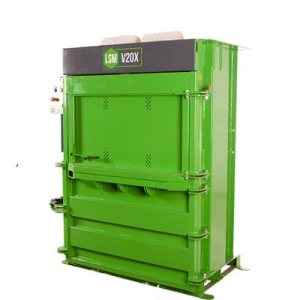
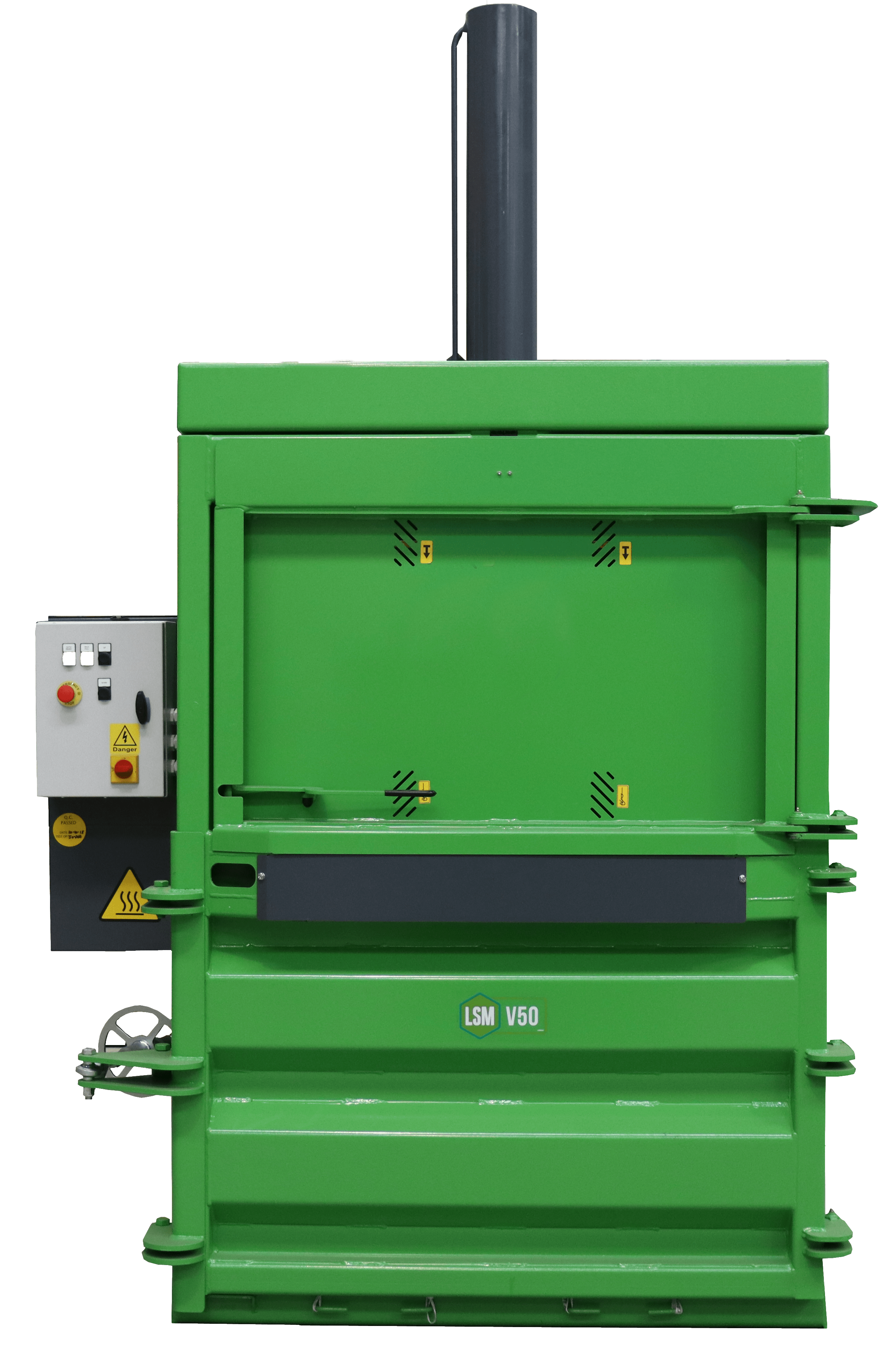
Check out our Collection Systems


Select another category


FAQ for Hook Type Compactor
A hook type compactor (also known as a roll-on/roll-off or hook-lift mobile compactor) is an integrated, self-contained waste management unit where the hydraulic pressing mechanism and the storage container are built onto a single transportable chassis. The front of the unit features a standardized high-tensile steel lift hook, and the rear is equipped with heavy-duty steel ground rollers. When the unit reaches capacity, a standard commercial hook-lift truck loads the entire machine onto its bed and transports it to a waste transfer facility or landfill for discharge, eliminating the need to detach a separate container on site.
The core distinction lies in transportability and structural design:
Feature | Hook Type (Portable) Compactor | Static (Stationary) Compactor |
|---|---|---|
Unit Structure | Press head and container are permanently combined | Press head is bolted to a concrete pad; container separates |
Transport Method | Whole machine is hauled away by a hook truck | Only the detached container box is removed by truck |
Best Waste Types | Wet waste, food scraps, cardboard, general mixed waste | High-volume dry waste, bulky dry cardboard, timber offcuts |
Civil Works | Minimal; requires only a level hardstand and power | Extensive; requires structural bolting, tie-downs, guide rails |
Odor & Pest Control | Sealed design prevents ground seepage and pest ingress | Seam between head and box can weep if used for wet waste |
Hook type compactors are versatile machines engineered to handle multiple high-density waste streams:
- Commercial and Industrial (C&I) Waste: Mixed packaging, soft plastics, film, and office waste.
- Paper and Cardboard: Whole packaging boxes, corrugate, and paper offcuts, achieving dramatic volume reduction without pre-shredding.
- Dry Municipal Solid Waste (MSW): Non-hazardous general garbage generated by multi-tenant complexes and retail hubs.
- Semi-Wet Waste Streams: When specified with continuous sealing and specialized door gaskets, standard general waste mixed with food packaging is contained without roadside spillage during transport.
Standard hook type compactors are engineered for heavy commercial demands, typically offering the following ratings:
Parameter | Standard Commercial Specification |
|---|---|
Available Container Volumes | 10 m3, 14 m3, 18 m3, 20 m3, 22 m3, and 24 m3 |
Compaction Force | 250 kN to 340 kN (~25 to 34 tonnes of hydraulic thrust) |
Cycle Time | 35 to 55 seconds per compaction stroke |
Hydraulic Drive | 5.5 kW to 7.5 kW high-efficiency electric motor |
Power Requirements | 400 V, 50 Hz, 3-Phase, 16 A / 32 A connection |
Hook Bar Height | Standard Australian hook-lift standard (typically 1,570 mm) |
Rear Door Mechanism | Ratchet screw locks or hydraulic opening with safety interlocks |
Loose and uncompacted commercial rubbish consists of roughly 75% to 85% void space. A hook type compactor applies tens of tonnes of hydraulic pressure to compress refuse into a dense block, achieving compaction ratios between 3:1 and 6:1 depending on waste density.
- 70% Fewer Haulage Runs: Facilities replacing open skips or multiple front-lift bins reduce truck collections from several times a week to once or twice a month.
- Lower Tipping Fees: Optimizing container payload ensures trucks haul maximum legal tonnage per trip, reducing per-tonne transport surcharges.
- Reduced Emissions: Cutting diesel truck movements lowers yard congestion, noise pollution, and scope 3 transport emissions.
Industrial compactors must comply with strict Australian workplace safety (AS/NZS 4024 Machine Safety) protocols:
- Emergency Stop Stations: Prominently placed mushroom push-buttons on the control panel and feed hoppers for immediate hydraulic shutdown.
- Interlocked Hopper Lids: The machine cannot cycle if the feed door or loading hopper cage is open.
- Low-Voltage Controls: Standard 24 V DC control circuits prevent electrical hazard risks to operators.
- Full-Container Notification: Optical or pressure-sensing “75% full” and “100% full” beacon lights alert staff when it is time to schedule a hauler swap.
Yes. Hook compactors can be equipped with side-mounted or rear-mounted integrated hydraulic bin tippers. These attachments allow single operators to lift and empty 120 L, 240 L, 660 L, or 1,100 L MGB wheelie bins at the push of a button. They include enclosed safety cages and interlocked access doors to ensure no operator can reach moving parts during tipping.
Because hook type compactors are delivered and removed fully assembled, site requirements are simple:
- Ground Pad: A level, reinforced concrete hardstand capable of supporting gross vehicle weights of up to 22–26 tonnes.
- Electrical Supply: A dedicated 400 V, 3-phase, 50 Hz industrial power supply terminating in a weatherproof 5-pin CEE socket nearby.
- Approach Clearance: Straight, overhead-unobstructed clearance (typically a minimum of 4.5 meters vertical and 15–20 meters straight run) to allow hook-lift haulage trucks to hoist and drop the unit.
To guarantee long operational life and prevent hydraulic failure:
- Hydraulic Fluid Care: Regular monitoring of hydraulic oil cleanliness, fluid levels, and return filter changes every 12 to 24 months.
- Guide & Roller Lubrication: Greasing of the rear ground rollers, hinge pins, and door ratchets.
- Hose and Cylinder Inspection: Routine checks for micro-leaks, hose abrasion, or valve wear. Smart Waste Australia provides nationwide scheduled servicing, preventative maintenance contracts, and emergency field repairs for all hook compactor models.