
Static Compactors




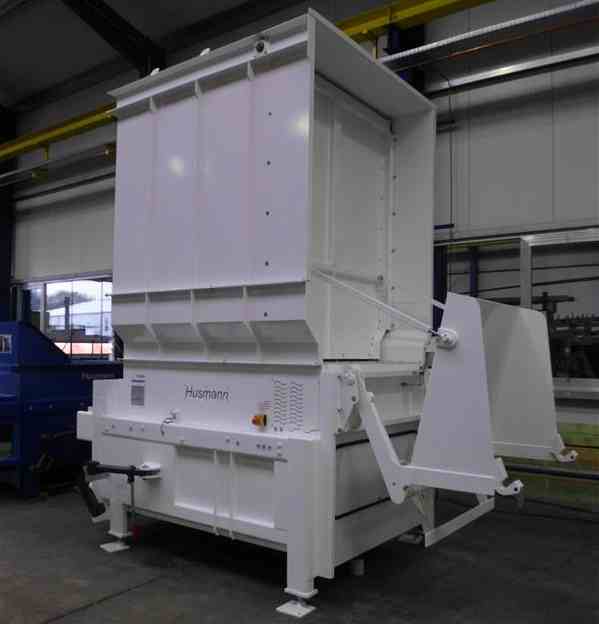


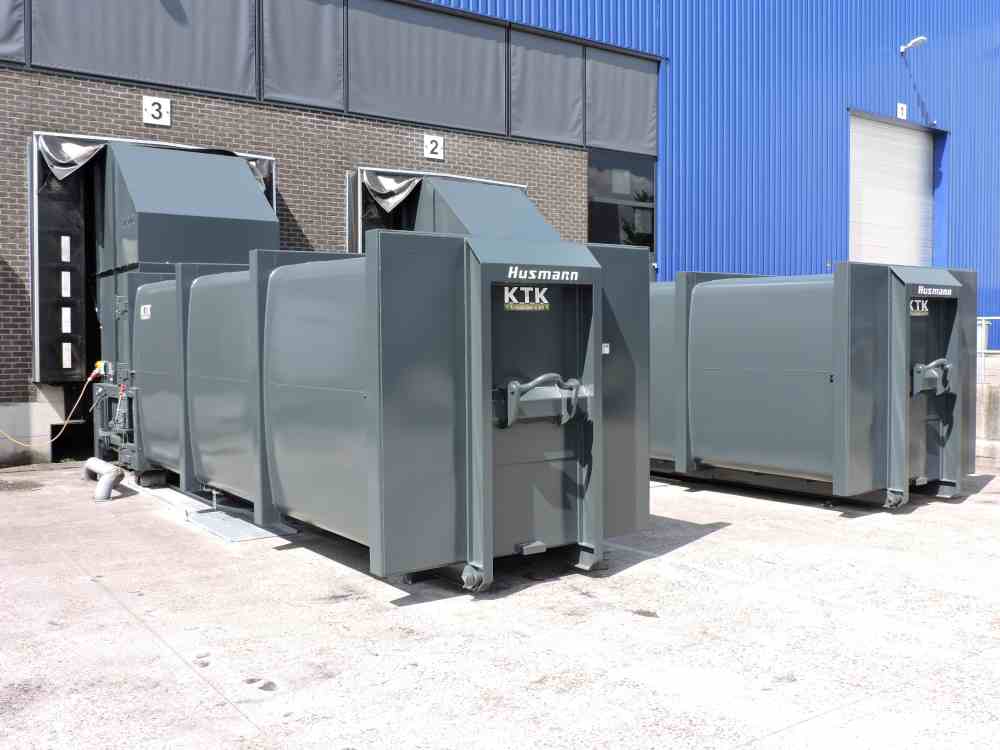
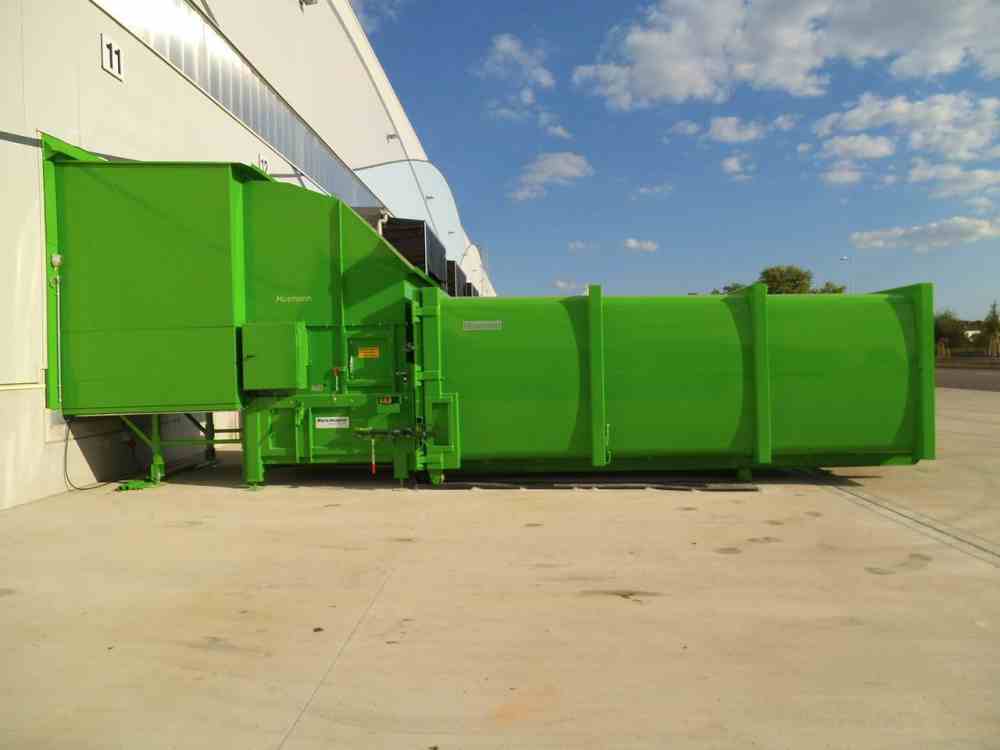
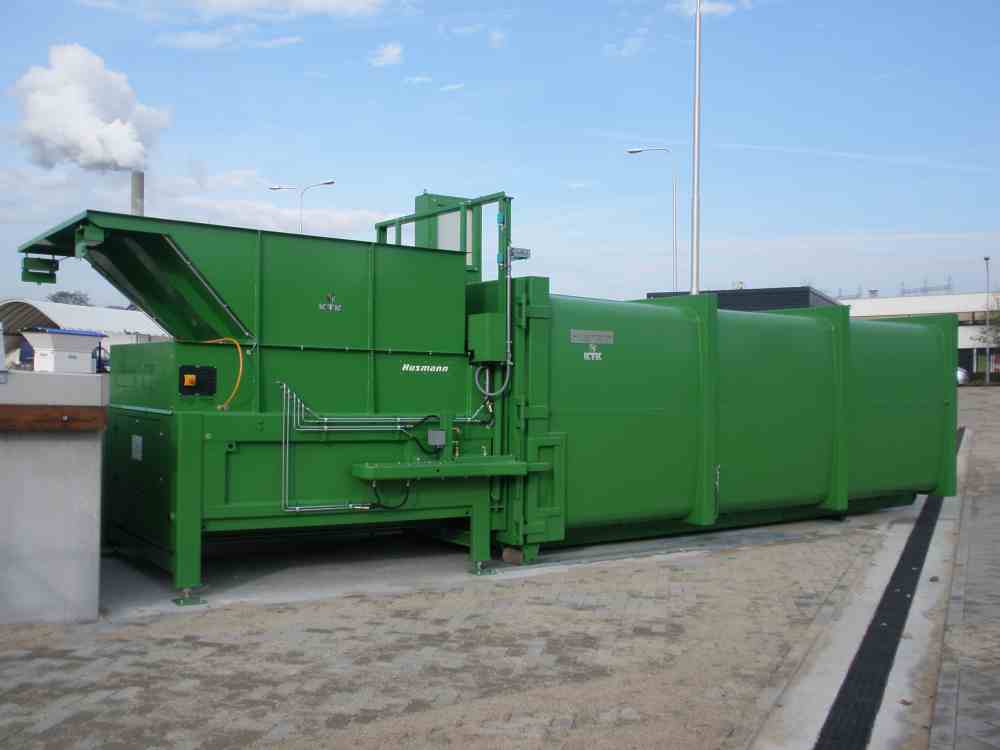

Recommended For businesses with

IGA and Supa IGA Stores
Supermarkets
Manufacturers
Hotels and Restaurants
Logistics Companies
Warehouses
Large Retail
Mine Sites
Benefits of the Static Compactors
Specifications
- Optimum pressing force thanks to robust, linear pressing cylinder.
- High-quality hydraulic and electronic components.
- Constant oil level and temperature monitoring.
- External hydraulic unit
- Maintenance -friendly and reliable.
- Adjustable pressing piston.
- Manual (optionally automatic) coupling with ratchet operation.
- Container full notification.
- High-quality two-component paint.
- Years of UV resistance.
- Extremely high scratch resistance.
- Reliable corrosion protection.
- Easy to clean.
- Color according to customer requirements.
- Reinforced press floor in the longitudinal and transverse directions.
- Press floor made of highly wear-resistant fine-grain structural steel.
- Long service life thanks to robust construction.
- Highest quality thanks to state-of-the-art robot production.
Specifications
- High-quality two-component paint.
- Years of UV resistance.
- Extremely high scratch resistance.
- Reliable corrosion protection.
- Easy to clean.
- Color according to customer requirements.
- Reinforced press floor in the longitudinal and transverse directions.
- Press floor made of highly wear-resistant fine-grain structural steel.
- Long service life thanks to robust construction.
- Highest quality thanks to state-of-the-art robot production.
Need a different baler size? See our Larger and Smaller models

Check out our Collection Systems


Select another category


FAQ for Static Compactors: Commercial FAQs & Engineering Specifications
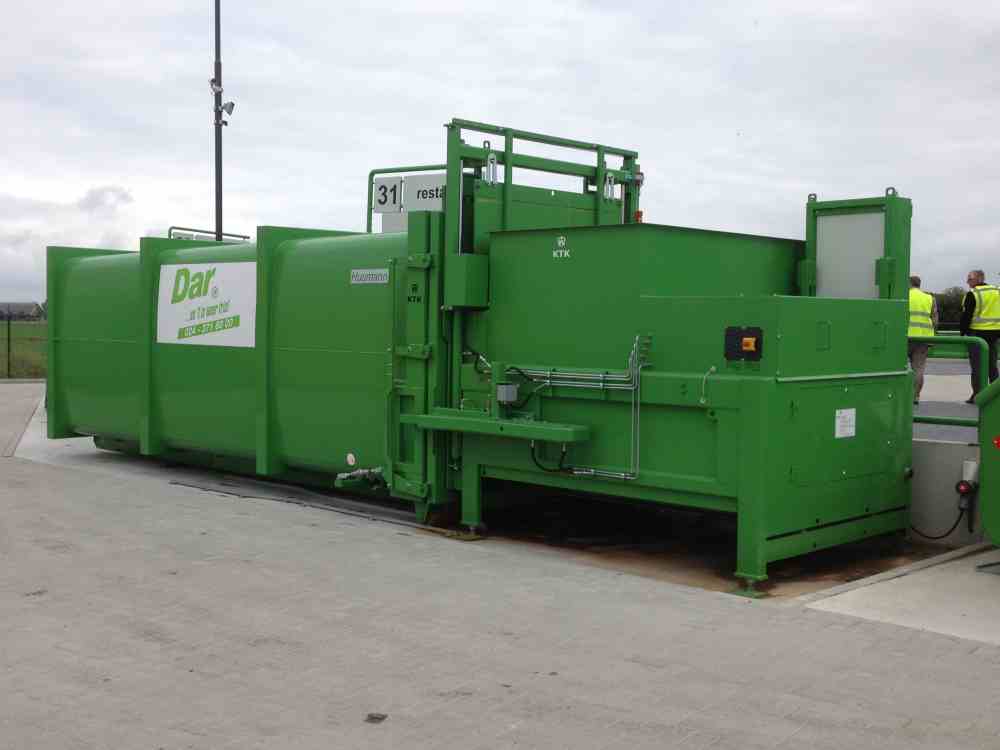
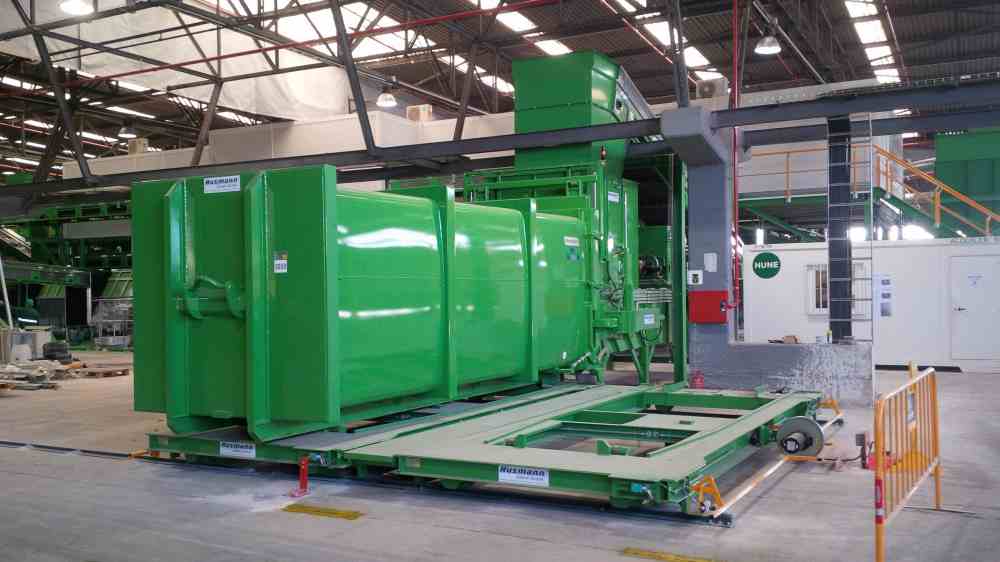
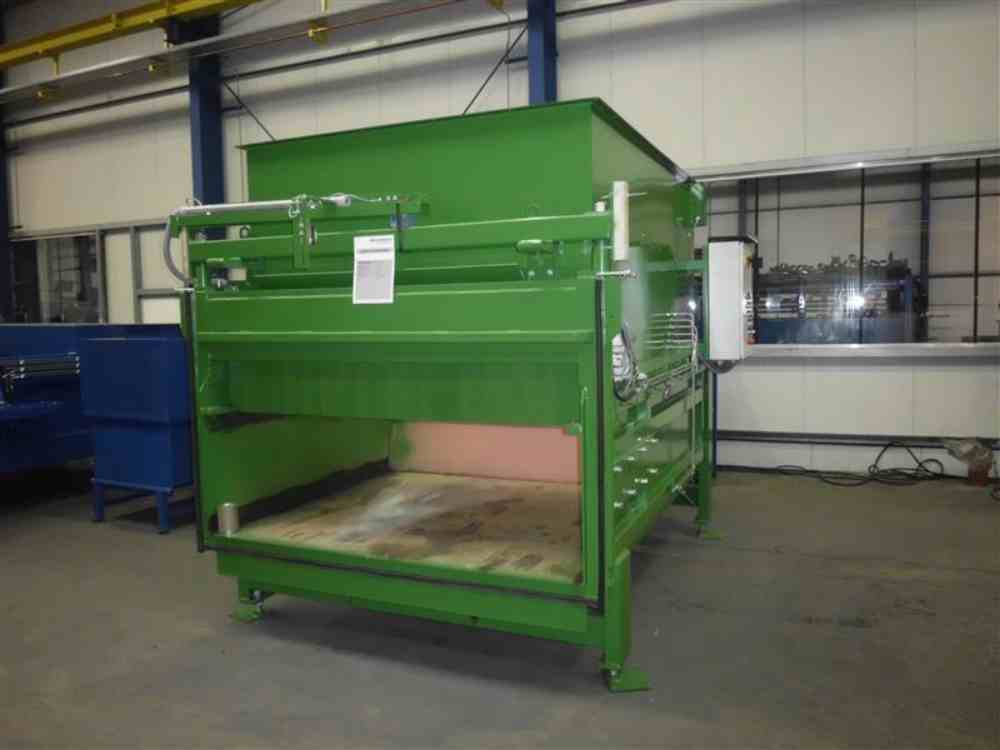
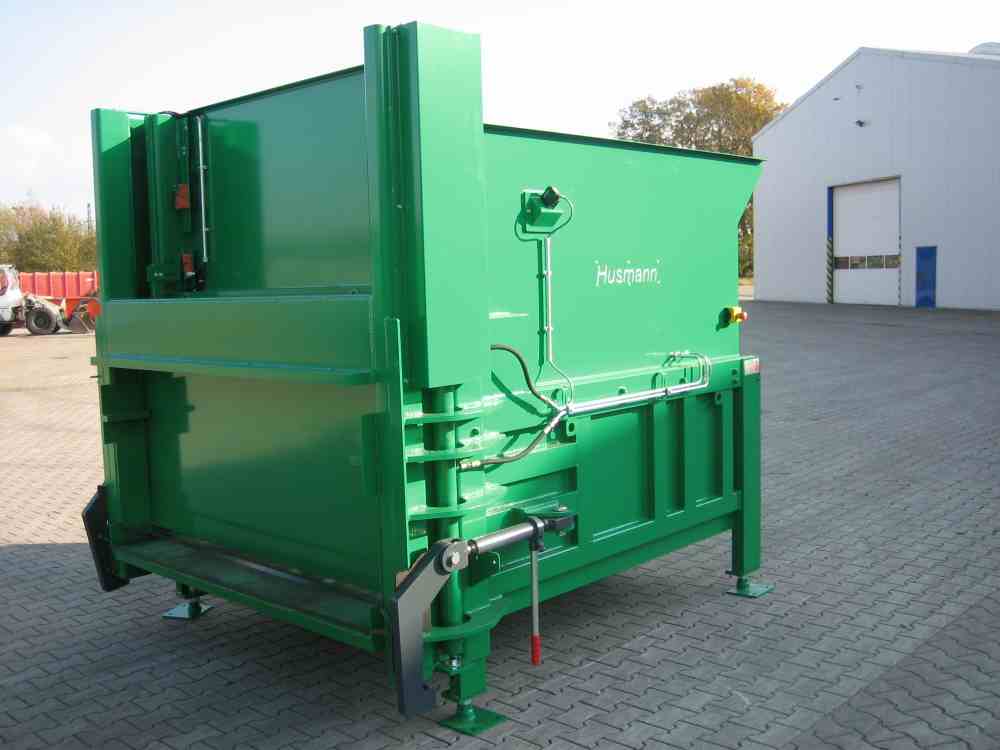
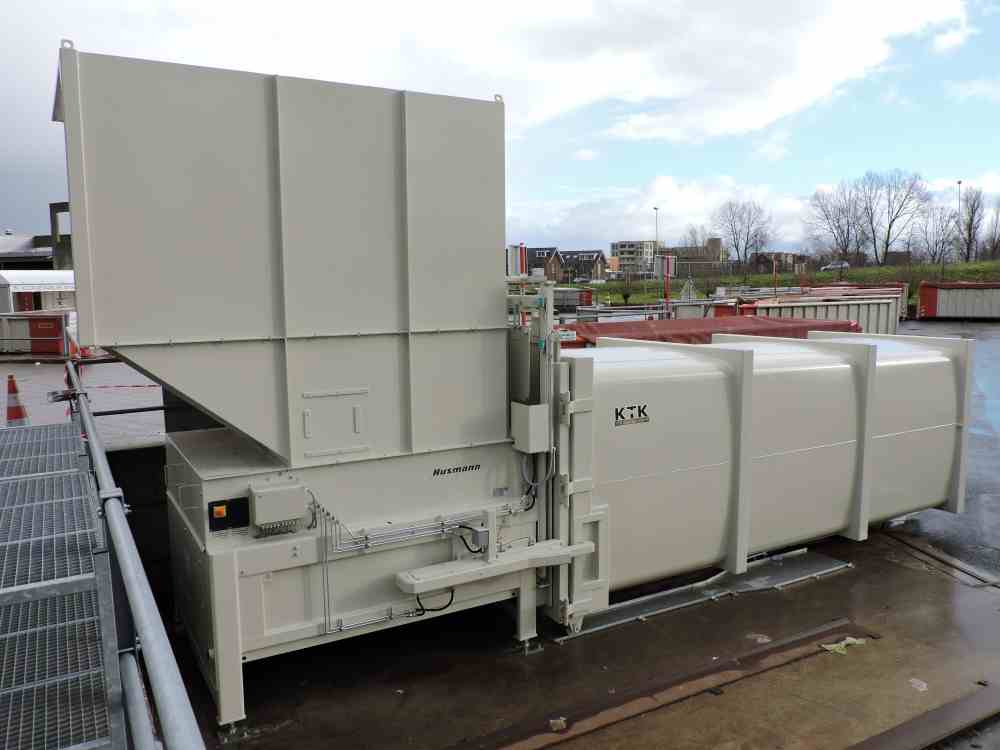
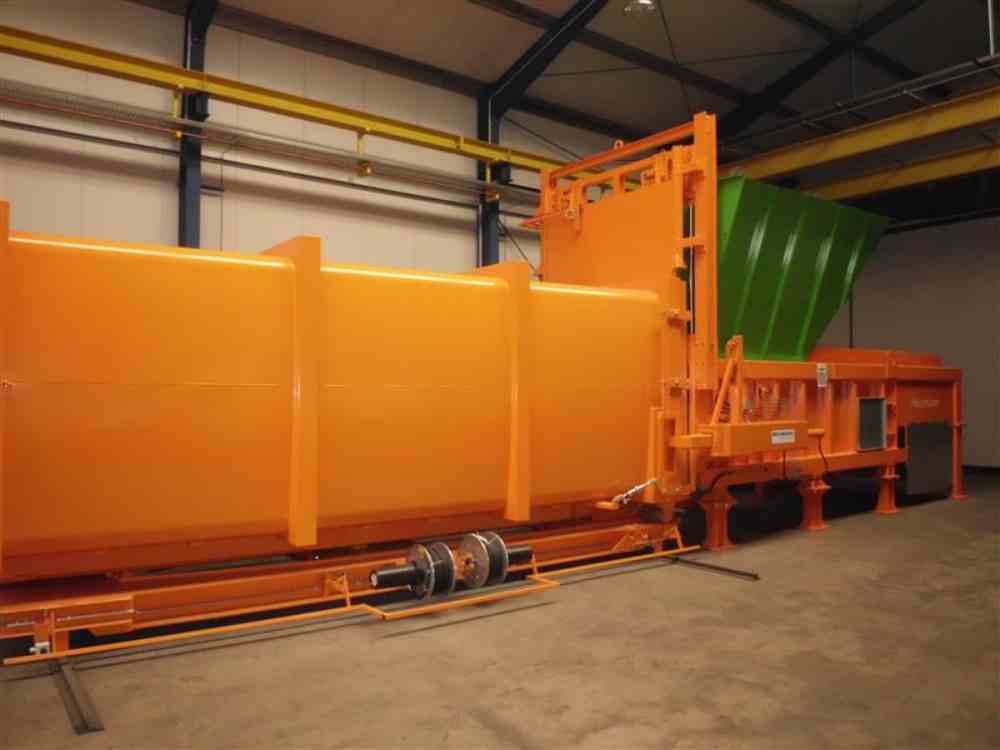
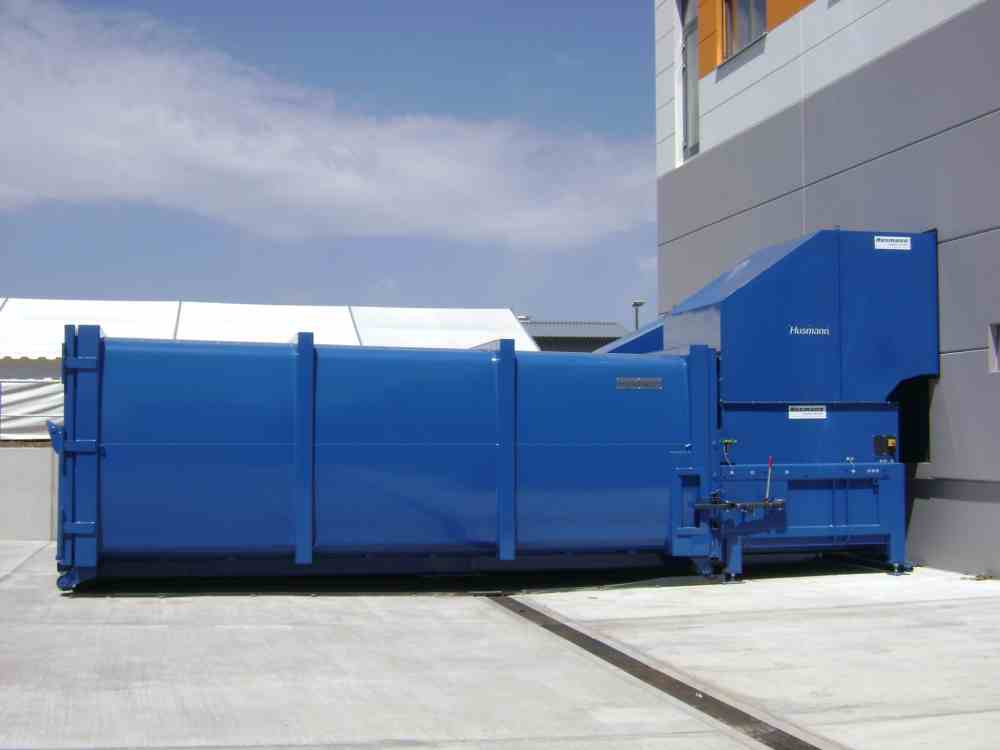
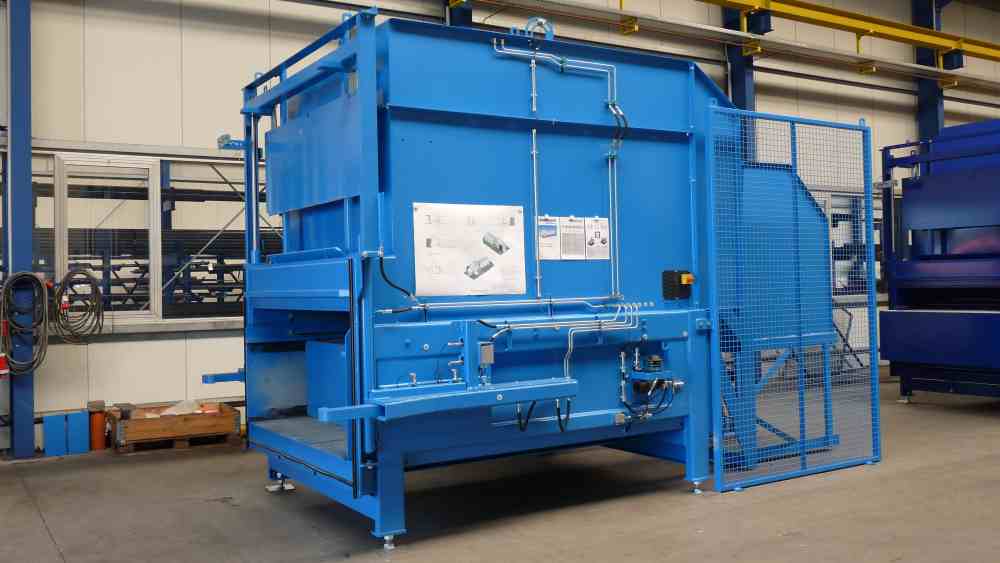
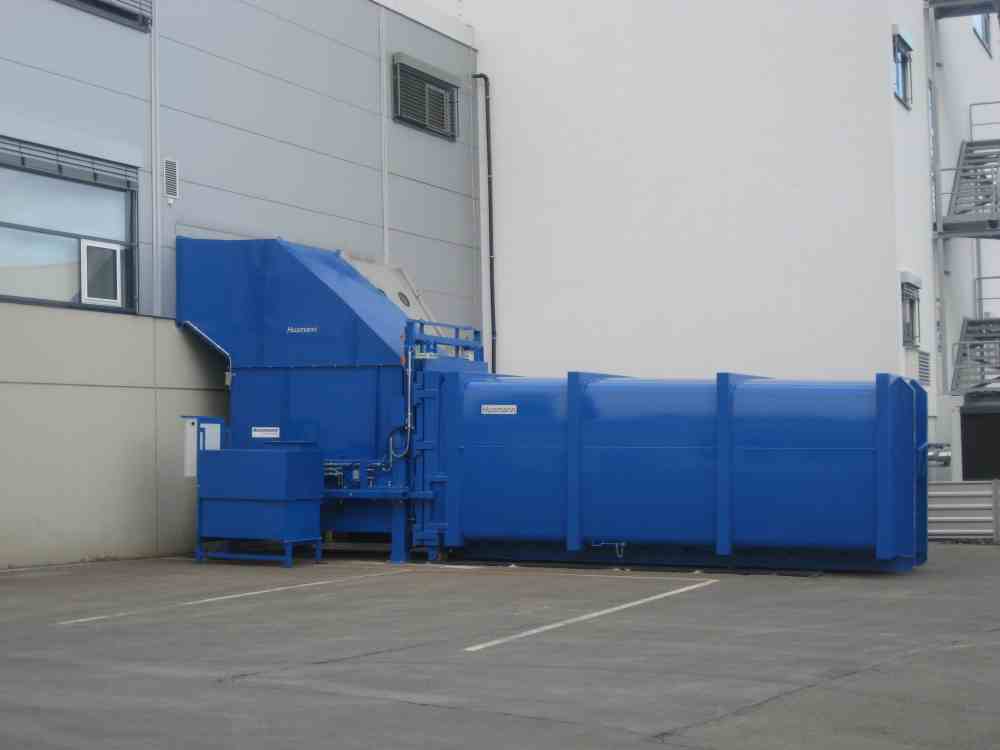
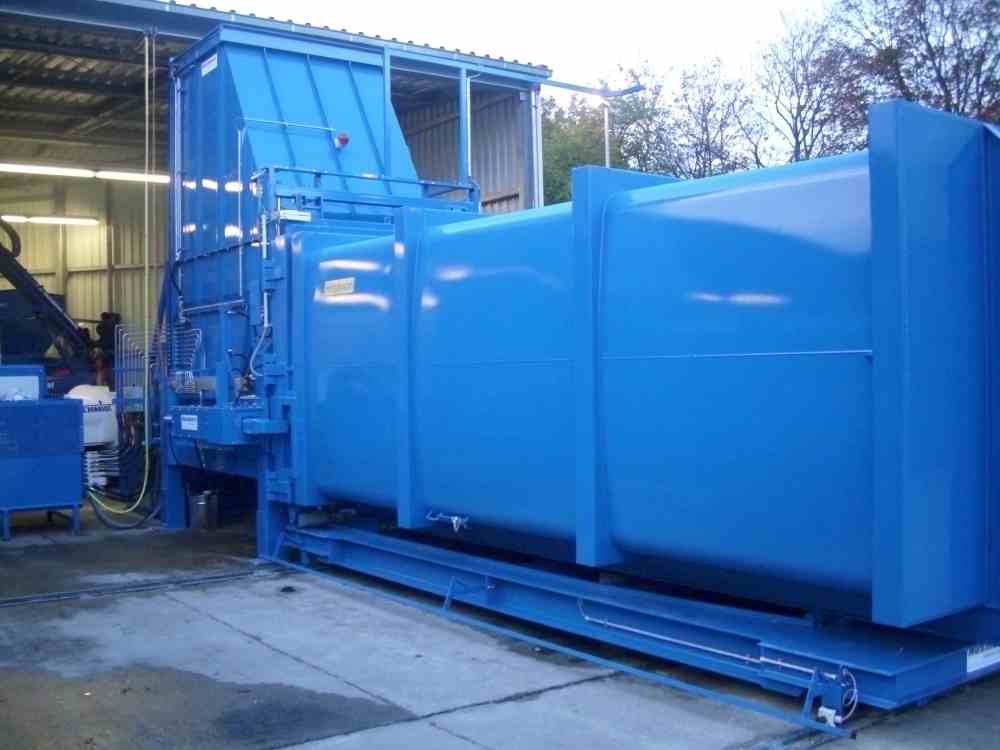
A static compactor (also called a stationary compactor) is a heavy-duty, permanently installed industrial waste compaction machine. Unlike portable compactors where the ram and bin form a single transportable unit, a static compactor has its hydraulic press unit anchored directly into a concrete foundation on site. A separate, high-capacity roll-on/roll-off (RoRo) container is clamped to the front of the compaction head. When the container reaches capacity, a transport truck disengages and hauls away only the container, leaving the heavy hydraulic compaction head on site ready to couple with a replacement empty bin.
The key difference lies in structural separation, civil requirements, and processing capacity:
Operational Feature | Static (Stationary) Compactor | Portable (Integrated) Compactor |
|---|---|---|
Machine Structure | Press head is bolted to concrete; container detaches | Press head and container form a single rigid body |
Haulage Method | Truck hauls only the detached container body | Truck transports the entire machine (ram + box) |
Daily Waste Volume | High to ultra-high commercial volumes (continuous feeds) | Low to medium volumes; restricted by single-bin limits |
Downtime During Transport | Zero downtime if a secondary empty container is on site | Complete downtime while the entire unit travels to dump |
Primary Material Suitability | Dry, bulky recyclables, corrugate, pallets, packaging | Wet, organic, or mixed waste requiring leak containment |
Civil Foundation Needs | Heavy-duty bolted footings, guide rails, and interlocks | Flat hardstand concrete slab with minimal setup |
Static compactors are engineered for aggressive volume reduction of dry, bulky commercial and industrial (C&I) waste streams:
- Large-Format Corrugated Cardboard (OCC): Whole furniture packaging, bulk appliance boxes, and distribution corrugate.
- Packaging Plastics & Stretch Film: Bulk pallet wrap, shrink covers, plastic drums, and strapping.
- Timber Crates & Light Pallets: Softwood dunnage, crating, and non-returnable packing materials.
- Non-Organic Municipal Solid Waste: High-volume dry retail waste, office paper, and non-perishable refuse.
Industrial static compactors are built for extreme duty cycles and high throughput:
Parameter | Standard Industrial Rating | Operational Impact |
|---|---|---|
Compaction Force | 300 kN to 500 kN (~30 to 50 tonnes) | Crushes rigid timbers, dense cardboard, and plastics |
Charge Chamber Volume | 1.0 m3 to 3.0 m3 per stroke | Accommodates oversized cartons without pre-breaking |
Cycle Duration | 30 to 60 seconds | Rapid reset for high-traffic loading docks and chutes |
Container Capacities | 20 m3, 30 m3, and 35 m3 RoRo bins | Maximum legal highway payloads per transport trip |
Motor Drive Output | 5.5 kW, 7.5 kW, 11 kW, or 15 kW | Continuous hydraulic duty for multi-shift facilities |
Floor & Ram Liners | Heavy-duty wear-resistant steel (e.g., Hardox/Bisalloy) | Prevents floor buckling from jagged metal and abrasive wear |
Because static compactors are bolted into structural concrete, they can exert higher hydraulic tonnages than mobile units:
- Compaction Ratio: Typically, 4:1 to 7:1 on corrugated paperboard, and up to 10:1 on loose plastic film.
- Transport Cost Reduction: Replaces up to 10 loose skip loads with a single consolidated container haul, cutting site traffic and transport invoices by 75% to 85%.
- Zero Disruption with Dual Containers: Sites with extreme throughput can keep a spare empty container on site. The hook truck drops the empty bin and pulls the full one, eliminating operational delays.
To stop compressed dry cardboard and packaging materials from expanding back into the pressing chamber:
- Structural Retaining Claws: Multi-tooth serrated steel claws welded inside the container aperture trap material forward after each stroke.
- Extended Ram Penetration: The pressing ram penetrates 200 mm to 350 mm past the container mouth, pushing material deep into the bin where retaining claws lock it into place.
- Programmed Ram Holding: Modern programmable logic controllers (PLCs) can hold the ram in full extension during dwell cycles to settle springy plastics.
Static compactors are versatile and integrate seamlessly with facility infrastructure:
- Through-the-Wall Dock Chutes: Waste fed directly from an internal warehouse floor into an external compactor via an enclosed chute.
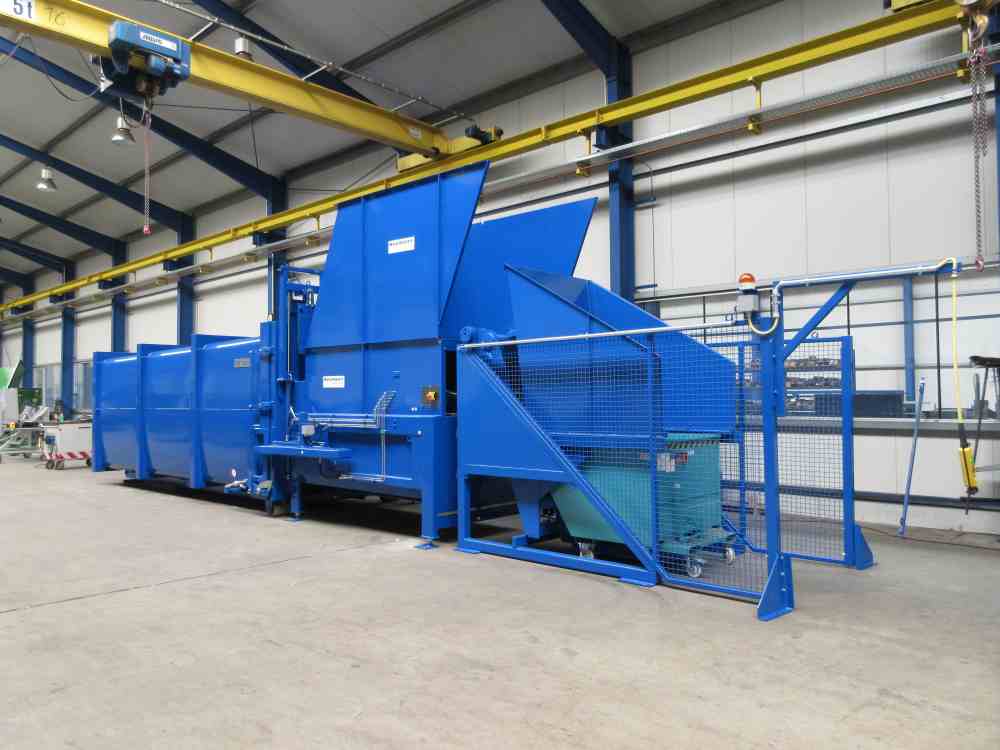
- Hydraulic Bin Tippers: Integrated or freestanding lifters for standard 120 L, 240 L, 660 L, and 1,100 L wheelie bins.
- Continuous Conveyor Feeds: Mechanized belt feeds direct from sorting lines or packaging shredders.
- Pneumatic or Baghouse Air Separators: Cyclone feeding systems directly dropping trim paper and corrugate into the hopper.
To protect operators in accordance with Australian machine safety standards (AS/NZS 4024):
- Caging & Optical Light Curtains: Prevents ram operation if personnel enter the loading hopper radius or open hopper access doors.
- Container Coupling Interlocks: Proximity sensors ensure the hydraulic ram cannot cycle unless the collection container is securely clamped to the press head.
- Emergency Stop Circuits: Dual-channel safety relays with multiple mushroom E-stops located at the operator station, tipping cage, and remote panels.
- Pin-Code / Key-Switch Access: Prevents unauthorized operation by untrained warehouse staff.
Because static compactors exert massive horizontal loads against their anchors, site prerequisites include:
- Structural Concrete Pad: A minimum 150 mm–200 mm reinforced concrete pad (rated 32 MPa or higher) designed to withstand high pull-out forces on anchor bolts.
- Steel Guide Rails: Surface-mounted or flush-grouted steel docking rails on the slab to guide roll-on/roll-off trucks for precise container alignment.
- Electrical Connection: A dedicated 400 V, 50 Hz, 3-phase supply (typically 32 A or 63 A depending on motor kW) housed in a weatherproof industrial isolator.
Scheduled servicing prevents cylinder damage and structural fatigue:
- Guide Shoe & Wear Pad Checks: Inspecting low-friction ram guide strips to prevent steel-on-steel friction wear inside the charge chamber.
- Hydraulic Fluid & Filter Replacements: Scheduled testing of hydraulic oil viscosity, pressure relief valve calibration, and periodic filter swaps.
- Anchor Bolt Torque Checks: Verifying that foundation chemical or expansion anchors remain torqued under continuous cyclic thrust. Smart Waste Australia provides nationwide scheduled preventative service agreements, cylinder overhauls, and emergency mechanical repairs.