The Hidden Cost of Cardboard Waste in Australian Warehouses
For many Australian warehouses, cardboard waste is treated as a routine operational issue. Boxes are flattened manually, bins fill up quickly, and waste collections become a recurring expense that simply gets accepted as part of doing business.
However, the true cost of cardboard waste is often much higher than businesses realise.
Beyond collection fees, warehouses lose money through:
- Excessive waste pickups
- Valuable storage space occupied by loose cardboard
- Employee time spent handling waste
- Higher landfill and disposal charges
- Missed recycling opportunities
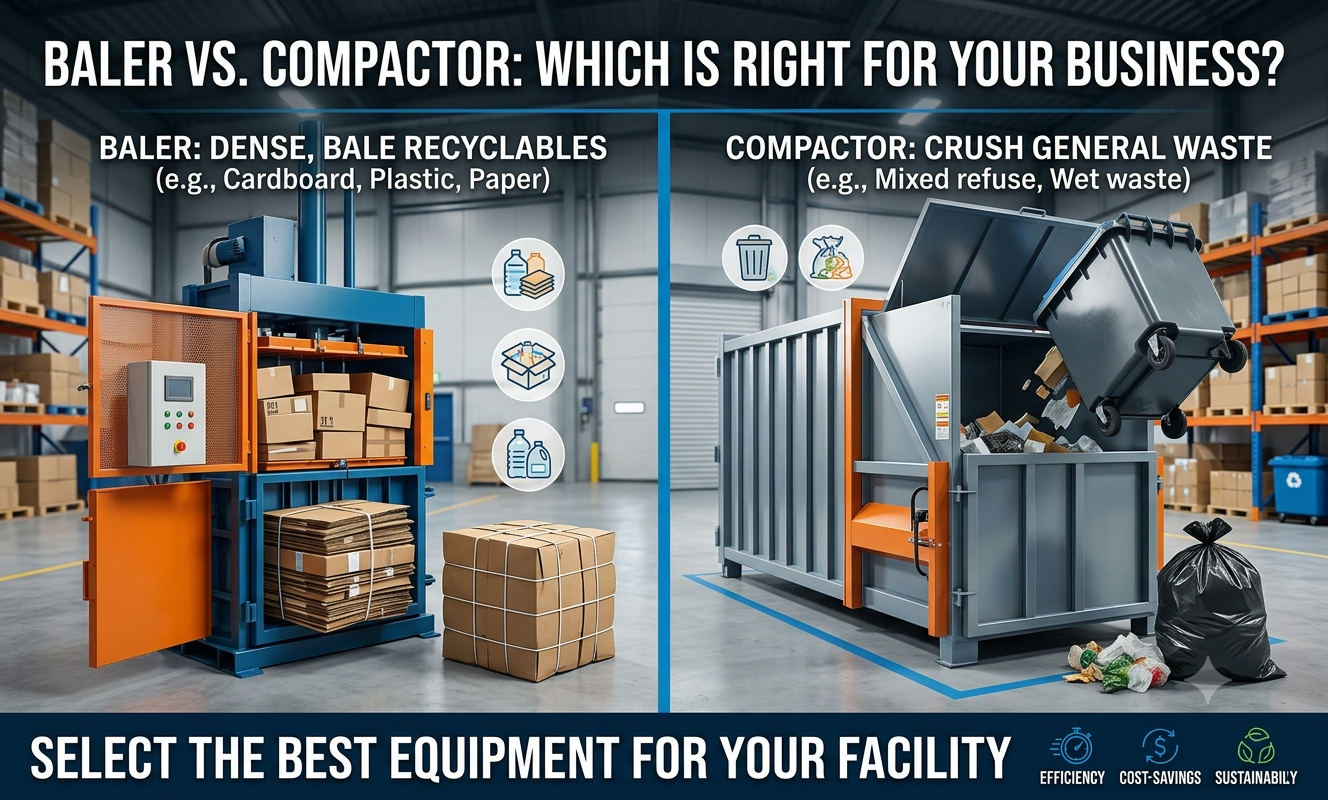
As waste management costs continue to rise across Australia, many warehouses are turning to Large Cardboard and plastic balers as a practical way to reduce operational expenses while improving efficiency.
Why Cardboard Waste Becomes Expensive
Loose cardboard takes up significant space.
A warehouse generating several cubic metres of cardboard each week may require multiple waste collections simply because the material is bulky rather than heavy.
This often results in:
- More frequent collections
- Larger skip bins
- Higher transportation costs
- Increased labour requirements
When cardboard is compacted into dense bales, waste volume can be reduced dramatically, allowing businesses to optimise storage and reduce collection frequency.
Example Cost Breakdown
Consider a medium-sized warehouse producing approximately 15–20 cubic metres of cardboard waste per week.
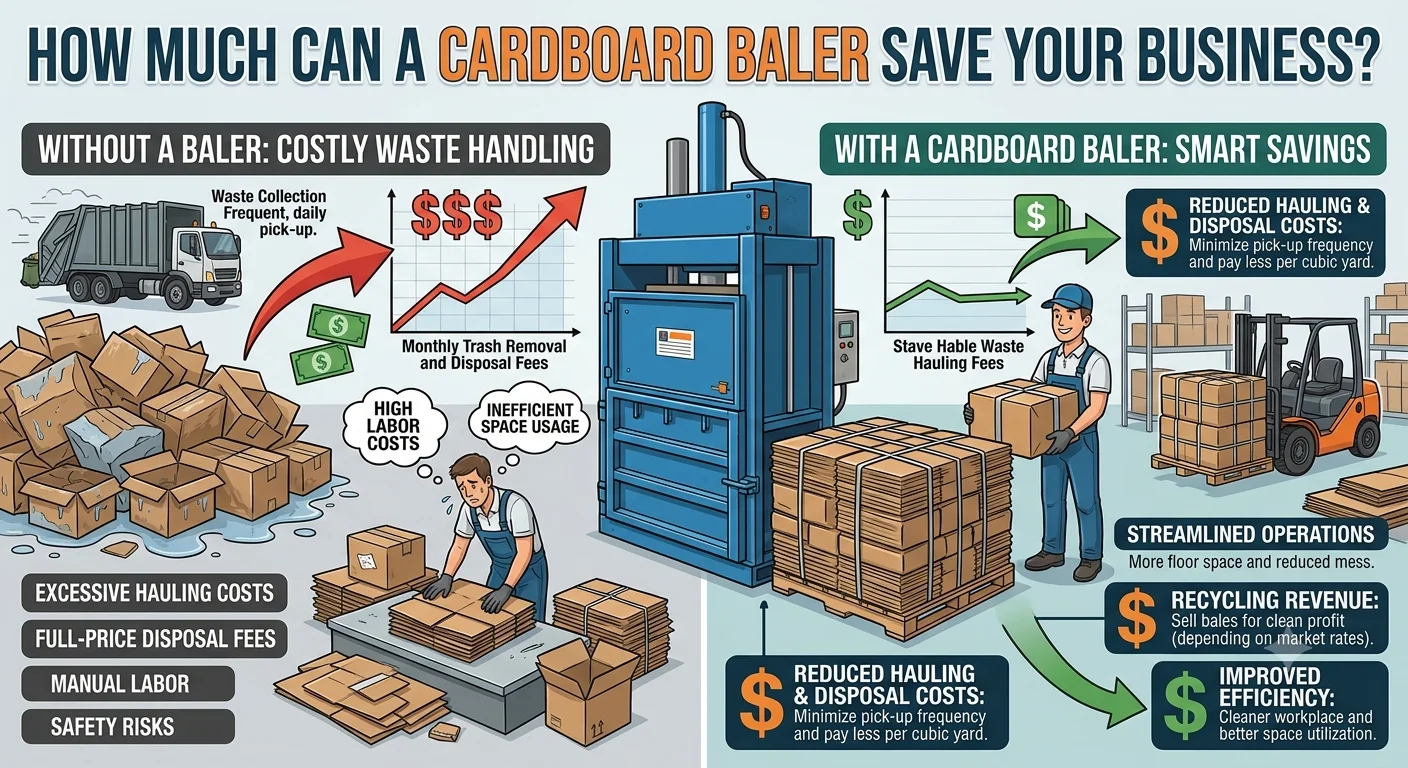
Without a cardboard baler:
- 3 waste collections per week
- Large skip bins required
- Significant floor space occupied
- Employees spending hours managing cardboard waste
After introducing a cardboard baler:
- Waste volume reduced by up to 90%
- Collection frequency significantly reduced
- Improved warehouse organisation
- Lower labour involvement
- Potential recycling revenue from baled cardboard
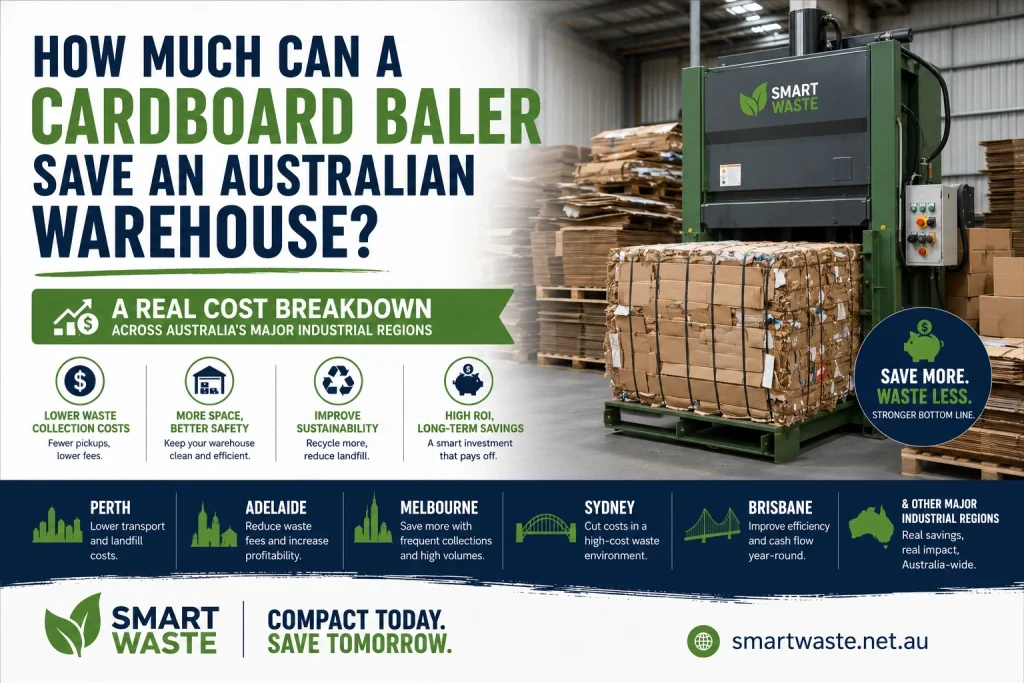
While savings vary between businesses, many warehouses discover that waste handling costs are substantially lower once cardboard is compacted at the source.
Additional Benefits Beyond Cost Savings
The financial savings are often only part of the return on investment.
Cardboard balers can also help businesses:
Improve Warehouse Safety
Loose cardboard creates trip hazards and cluttered work areas.
Compacting cardboard into manageable bales helps maintain cleaner and safer facilities.
Increase Available Floor Space
Storage space is valuable in every warehouse.
Reducing cardboard volume creates room for inventory, equipment, and operational activities.
Support Sustainability Goals
Recycling compacted cardboard is easier and more efficient than disposing of loose material.
Many businesses use balers as part of broader sustainability and waste reduction initiatives.
Is a Cardboard Baler Right for Your Business?
A cardboard baler is typically worth considering if your facility:
- Generates large volumes of cardboard packaging
- Requires frequent waste collections
- Struggles with storage space
- Wants to improve recycling rates
- Is looking for long-term waste cost reductions
Warehouses, logistics centres, manufacturing facilities, retail distribution hubs, and large commercial operations are often the biggest beneficiaries.
Final Thoughts
The cost of cardboard waste extends far beyond collection invoices.
By reducing waste volume, improving operational efficiency, and increasing recycling opportunities, cardboard balers can help Australian warehouses take greater control of waste management costs.
For businesses generating consistent volumes of cardboard waste, investing in the right waste handling solution can deliver both immediate operational improvements and long-term financial benefits.