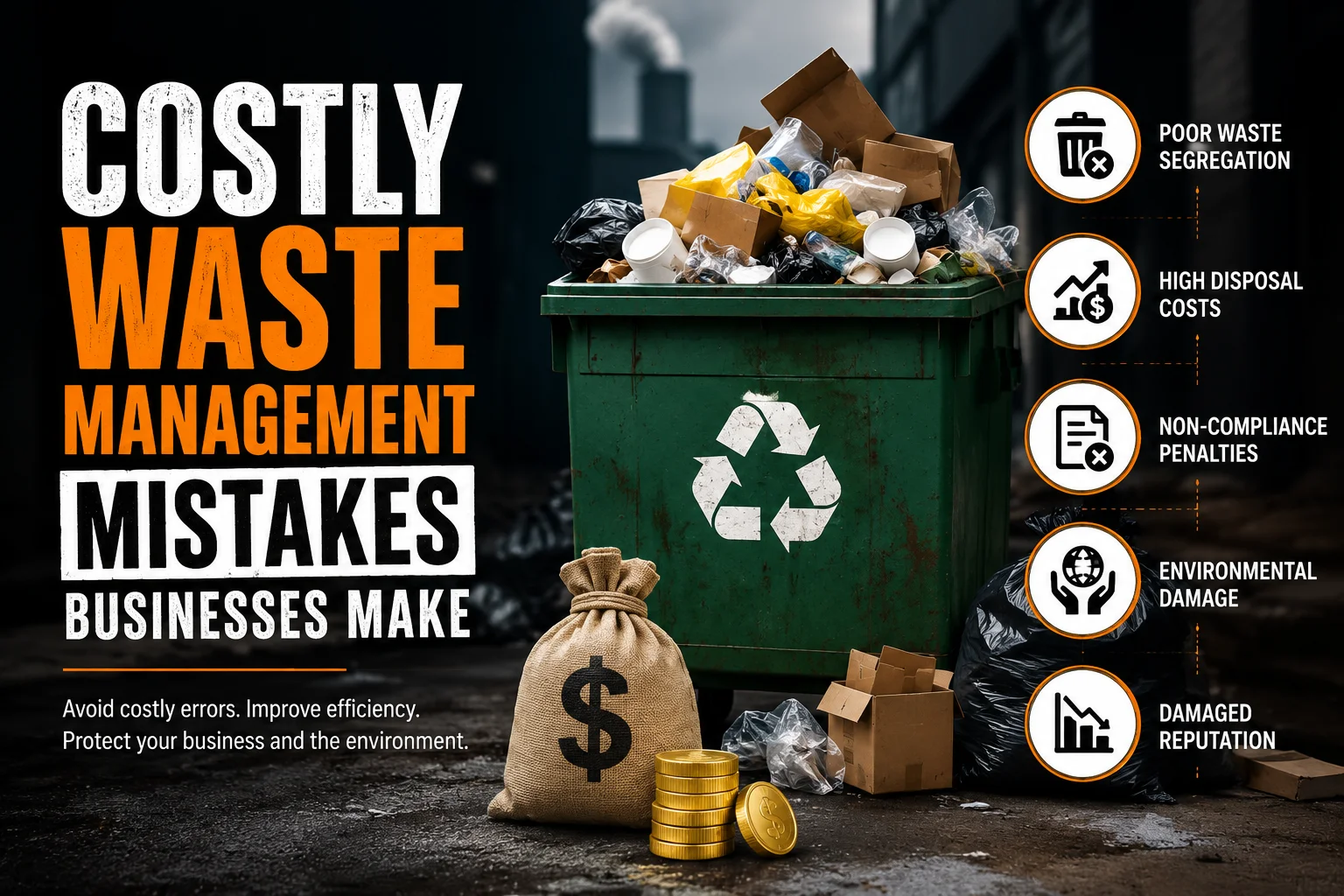
Waste management is often viewed as a routine operational task—bins are emptied, recyclables are collected, and business continues as usual. However, many organisations don’t realise that inefficient waste management practices can quietly increase operating costs, reduce workplace efficiency, and limit recycling opportunities.
Whether you operate a warehouse, manufacturing facility, retail store, logistics hub, or hospitality business, the way waste is managed affects more than just cleanliness. It influences labour productivity, storage space, collection costs, workplace safety, sustainability goals, and overall operational performance. The challenge is that many businesses repeat the same avoidable mistakes year after year without reviewing their processes.
In this guide, we’ll explore seven common waste management mistakes that can cost businesses time and money and the practical steps you can take to improve efficiency and get more value from your waste management strategy.
Why Waste Management Deserves More Attention
As businesses grow, so does the volume and complexity of their waste. More deliveries mean more cardboard, increased production creates additional packaging waste, and expanding operations often lead to more frequent waste collections.
Without regular reviews, these changes can result in:
Higher waste disposal costs
Overflowing bins and storage areas
Lost recycling opportunities
Unnecessary labour
Cluttered workspaces
Reduced operational efficiency
Fortunately, many of these issues can be addressed through better planning, improved waste segregation, and selecting equipment that matches your waste volumes.
Mistake 1: Mixing Recyclable and General Waste
One of the most common and expensive mistakes businesses make is disposing of recyclable materials with general waste. Cardboard, paper, plastics, glass, and other recyclable materials are often placed in the same bins as general rubbish. Once contamination occurs, recycling becomes more difficult, and businesses may pay to dispose of materials that could otherwise be recovered.
A Better Approach: Create clearly labelled waste streams and ensure recyclable materials are separated at the point of disposal. For businesses generating significant volumes of cardboard, using a cardboard baler can also help keep recyclable materials organised while reducing storage requirements.
Mistake 2: Paying for More Waste Collections Than Necessary
Many organisations continue with the same waste collection schedule even after their operations change. For example, a business may have arranged daily collections several years ago but now produces less waste due to operational improvements or increased recycling. On the other hand, growing businesses often continue using waste systems that no longer meet their needs, resulting in overflowing bins and inefficient collection schedules. Both situations increase operating costs unnecessarily.
A Better Approach: Review your waste collection frequency at least annually. Assess:
How full waste bins are before collection
Seasonal changes in waste volumes
Opportunities to increase recycling
Whether compacting recyclable materials could reduce collection frequency
Small adjustments to collection schedules can often improve efficiency without affecting day-to-day operations.
Mistake 3: Treating Cardboard as Just Another Waste Product
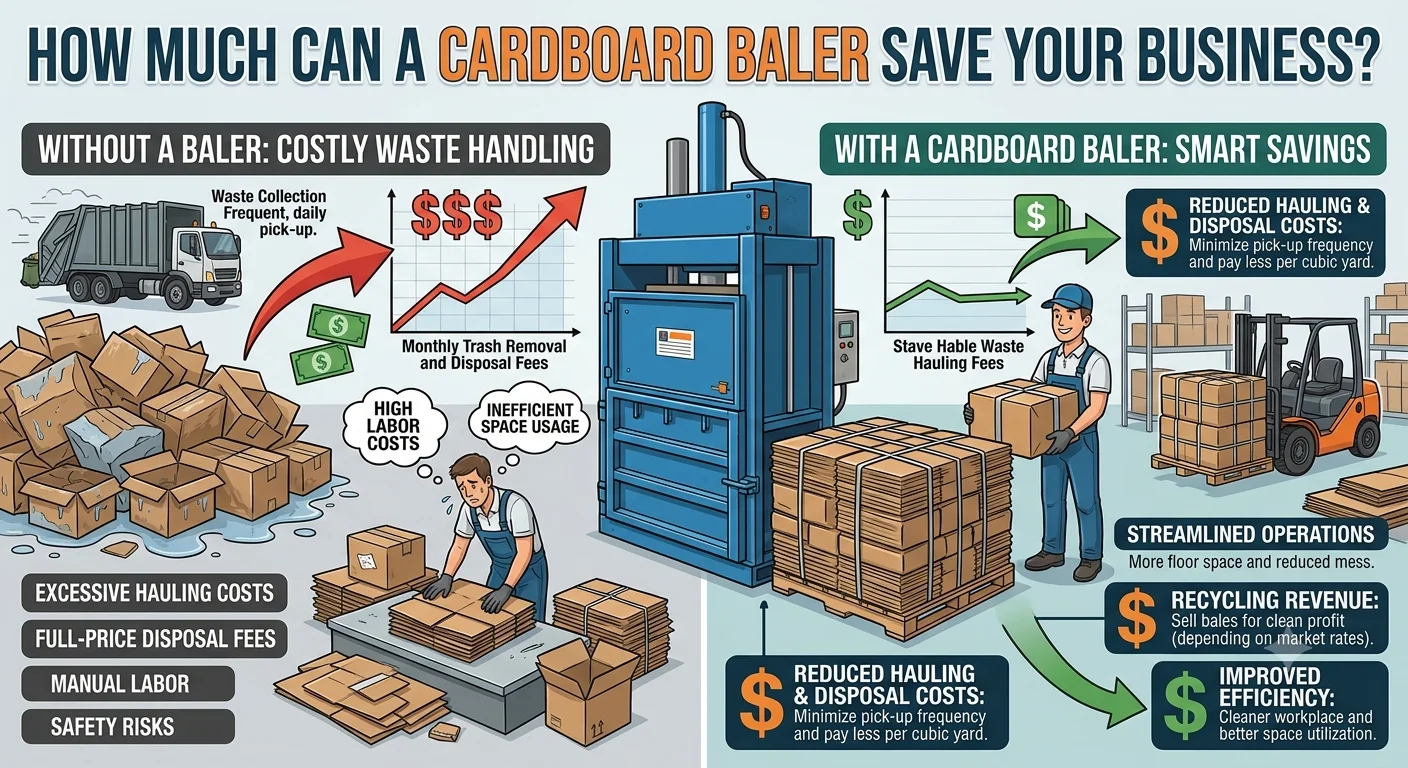
Cardboard is one of the most common commercial waste streams, yet many businesses still handle it inefficiently. Loose cardboard occupies valuable warehouse space, creates clutter around receiving areas, and requires staff to spend time flattening boxes and managing overflowing recycling bins. As waste volumes increase, these inefficiencies become more noticeable.
A Better Approach: Businesses generating regular cardboard waste should evaluate whether dedicated recycling processes would improve efficiency. Depending on waste volumes, a vertical or horizontal cardboard baler may help:
Reduce storage space
Improve workplace organisation
Simplify recycling
Reduce manual handling
Prepare recyclable materials for collection more efficiently
The right approach depends on the scale of your operations rather than simply the amount of cardboard generated today.
Mistake 4: Choosing Equipment Based Only on Purchase Price
When investing in waste management equipment, many businesses focus primarily on the initial purchase price. While budget is important, selecting equipment solely because it is the least expensive option can create long-term operational challenges.
Equipment that is too small may struggle to keep up with growing waste volumes, while oversized machinery may represent unnecessary capital expenditure. Similarly, choosing equipment without considering maintenance, servicing, ease of use, or future expansion can reduce overall value.
A Better Approach: Evaluate equipment based on:
Current waste volumes & future business growth
Available floor space
Waste streams generated
Ease of operation & maintenance requirements
Long-term operational efficiency
Waste Management Practices: A Quick Comparison
| Common Practice | Potential Impact | Improved Approach |
| Mixing recyclable & general waste | Reduced recycling efficiency and higher disposal costs | Separate waste streams with clear recycling processes |
| Fixed waste collection schedules | Paying for unnecessary collections or overflowing bins | Review collection frequency based on actual waste volumes |
| Storing loose cardboard | Clutter, manual handling, and wasted space | Compact cardboard and organise recyclable materials |
| Choosing equipment on price alone | Equipment may not meet long-term operational needs | Select solutions based on waste volume, growth, and efficiency |
Mistake 5: Skipping Preventive Equipment Maintenance
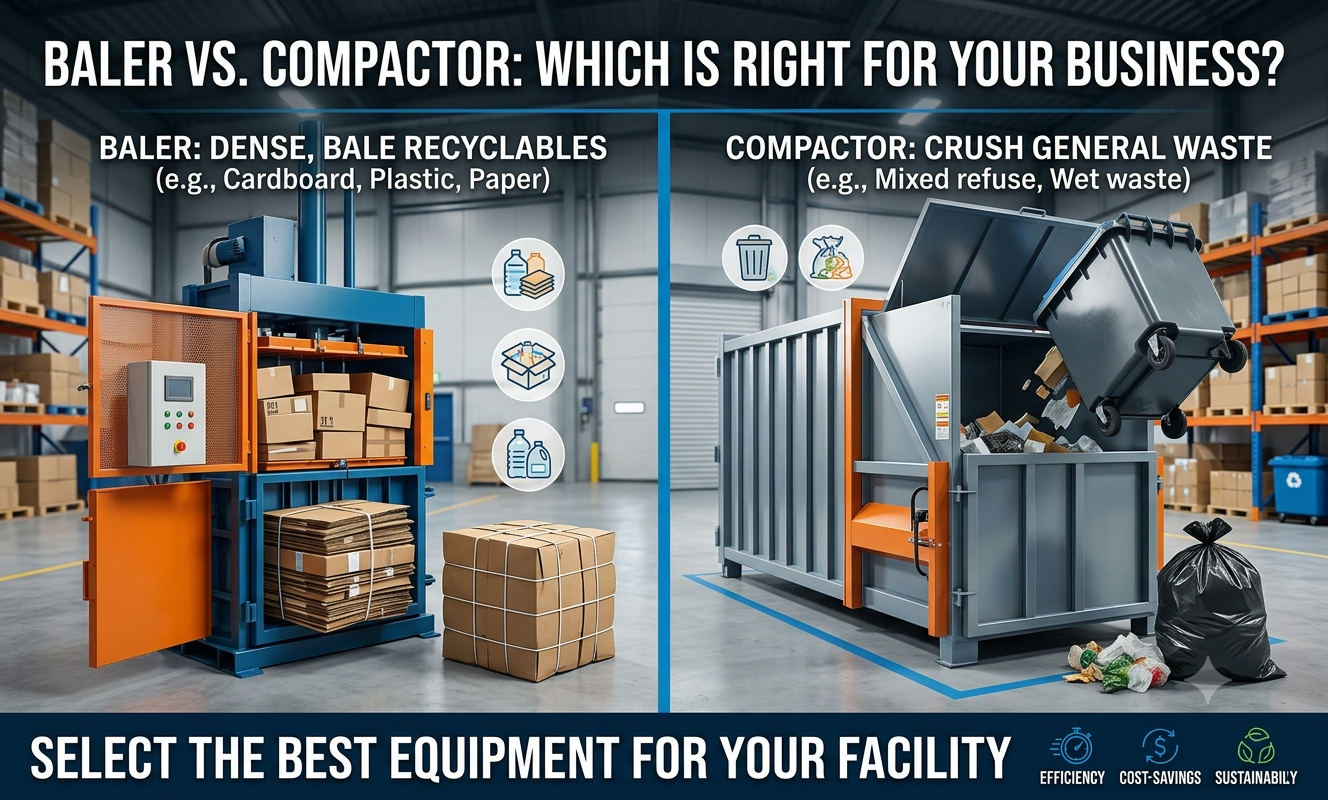
Waste management equipment is designed to withstand demanding commercial environments, but like any machinery, it performs best when maintained regularly. Delaying inspections or servicing may not seem significant initially, but over time it can lead to reduced efficiency, unexpected downtime, and higher repair costs. A baler or compactor that isn’t operating at peak performance can slow waste processing and disrupt daily operations.
A Better Approach: Develop a preventive maintenance schedule based on the manufacturer’s recommendations and the intensity of equipment use. Routine servicing helps maintain reliable performance, identify wear early, reduce downtime, extend equipment lifespan, and support safe operation.
Mistake 6: Overlooking Employee Training
Even the best waste management systems rely on people using them correctly. Without clear guidance, recyclable materials may end up in general waste bins, contamination can increase, and equipment may not be used as intended. These issues reduce recycling efficiency and can create unnecessary costs.
A Better Approach: Provide employees with simple, practical guidance on:
Separating recyclable and general waste
Correct use of waste management equipment
Safe handling of recyclable materials
Reporting equipment issues promptly
Maintaining clean and organised waste areas
Mistake 7: Never Reviewing Waste Management Performance
Many businesses implement a waste management process once and rarely revisit it. However, waste generation changes as businesses expand, product lines evolve, or customer demand shifts. A system that worked well several years ago may no longer be the most efficient option today.
A Better Approach: Schedule a waste management review at least once a year or whenever significant operational changes occur. Review waste volumes by material type, collection frequency, recycling rates, equipment utilisation, storage space requirements, and staff feedback.
Are You Making These Mistakes?
Use this quick checklist to evaluate your current waste management practices:
Are recyclable materials always separated from general waste?
Do your waste collection schedules reflect current waste volumes?
Is cardboard stored in an organised and space-efficient way?
Is your waste management equipment suitable for your operational needs?
Is equipment serviced according to a maintenance schedule?
Have employees received waste segregation training?
Have you reviewed your waste management process within the last 12 months?
If you checked “No” to several items, your business may have opportunities to improve efficiency, reduce waste-related costs, and strengthen recycling performance.
Industry Examples
Warehousing and Distribution: Warehouses often generate large volumes of cardboard from incoming deliveries. Compacting recyclable materials can free up valuable floor space, reduce clutter, and simplify collection.
Manufacturing: Manufacturers commonly manage multiple waste streams, including cardboard, plastics, timber, and metal. Regular waste reviews help ensure recyclable materials are handled efficiently while supporting operational productivity.
Retail: Retail businesses receive frequent shipments that create packaging waste. Improving cardboard handling and recycling processes can keep stockrooms organised and reduce unnecessary waste collections.
Logistics: Shipping and fulfilment operations rely on efficient packaging management. Better waste segregation and appropriately sized equipment help maintain smooth workflows during busy periods.
Hospitality: Hotels, restaurants, and entertainment venues produce a combination of packaging, glass, and general waste. Structured recycling systems and regular staff training can improve waste handling and support sustainability initiatives.
Expert Tips for Better Waste Management
Improving waste management doesn’t always require major operational changes. Focus on these practical steps:
Review waste collection contracts regularly.
Monitor changes in waste volumes as your business grows.
Separate recyclable materials as close as possible to where they are generated.
Choose equipment based on operational needs rather than purchase price alone.
Train employees on waste handling procedures.
Keep equipment serviced and maintained.
Measure improvements over time rather than making one-off changes.
Turn Better Waste Management into Better Business Performance
Effective waste management is about more than keeping premises clean. It can improve operational efficiency, support recycling goals, make better use of available space, and help businesses manage waste more effectively as they grow.
Avoiding common mistakes starts with understanding how waste is generated, handled, and collected across your organisation. Small improvements in these areas often create meaningful operational benefits over time.
Whether your business is reviewing its current waste processes or planning for future growth, Smart Waste Solutions offers waste management equipment and practical solutions designed to support businesses across a wide range of industries.
Contact Smart Waste Solutions today to discuss your operational requirements and identify waste management solutions that align with your recycling goals and long-term business needs.
Frequently Asked Questions for 7 Costly Waste Management Mistakes Businesses Make
One of the most common mistakes is mixing recyclable materials with general waste, which reduces recycling efficiency and can increase disposal costs.
Businesses can review collection schedules, improve waste segregation, recycle more effectively, and ensure their waste management equipment matches operational requirements.
An annual review is a good starting point. Reviews should also be carried out after significant operational changes, business growth, or changes in waste volumes.
Separating recyclable materials from general waste improves recycling efficiency, reduces contamination, and helps businesses manage waste more effectively.
Businesses should consider equipment when manual waste handling becomes inefficient, waste volumes increase, storage space becomes limited, or recycling processes need improvement.
Yes. Clear training helps employees separate waste correctly, use equipment safely, and maintain consistent recycling practices across the workplace.
Improved recycling processes, reduced waste generation, and efficient resource use can all contribute to broader business sustainability objectives.
Key considerations include waste volume, available space, future growth, maintenance requirements, ease of operation, and the types of waste generated.