
Weighing Devices





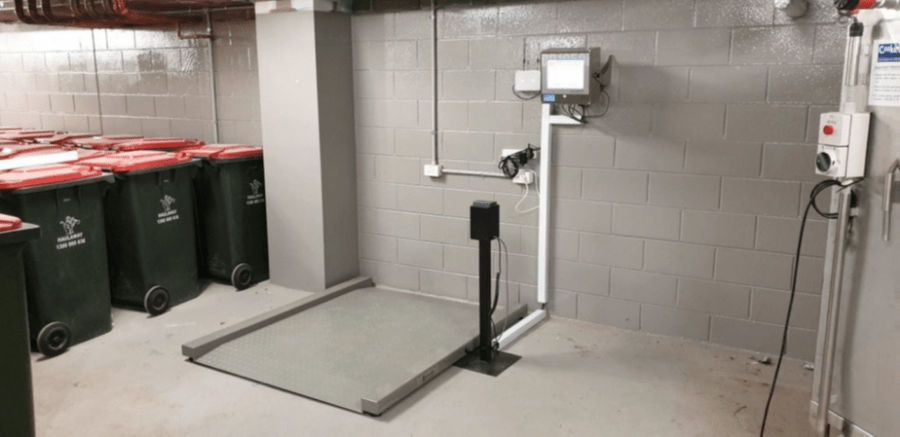

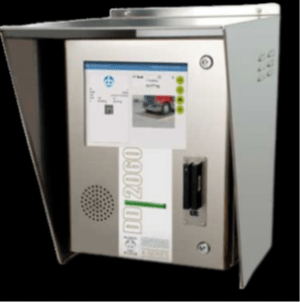
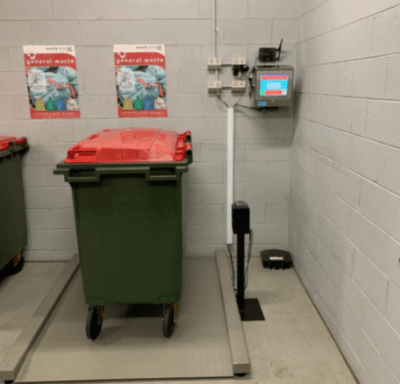
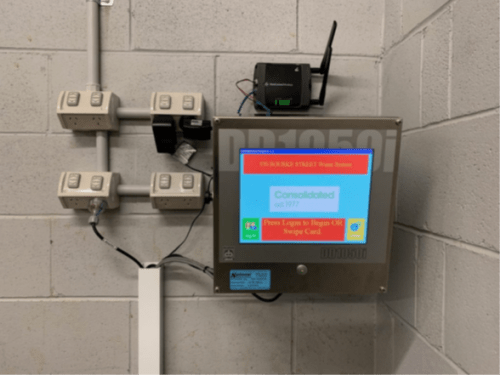
Recommended For businesses with a medium to high volume of waste

Logistics Companies
Supermarkets
Hotels and Restaurants
Mine Sites
Benefits of the Smart Weigh Technology
- Accurately weigh each bin before being tipped.
- Each user can be invoiced based on amount of waste they contribute Full.
- Data capturing and analytics.
- Achieve consistent fully loaded weights within compactor Live .
- Tracking to enable collections to be planned accordingly.
- Accurately weigh each bin before being tipped Each user can be invoiced based on amount of waste they contribute Full data capturing and analytics.
- Achieve consistent fully loaded weights within compactor Live tracking to enable collections to be planned accordingly.
Smart Weigh Technology Detail's
Need something else? check out some other equipment


Check out our Collection Systems


Select another category


FAQ for Industrial Waste Weighing Systems: Commercial FAQs & Dynamic Scale Integration Guide
Industrial waste weighing systems are certified mechanical and electronic mass-measurement solutions engineered to capture weight data across commercial collection, transport, and disposal cycles.
Operating across multiple operational points—from integrated compactor frames and onboard dynamic bin lifters to high-tonnage vehicle weighbridges—these systems provide certified weight records essential for pay-by-weight billing, heavy vehicle Chain of Responsibility (CoR) axle-load compliance, route efficiency auditing, and automated container collection dispatching.
Commercial and municipal facilities deploy four main weighing configurations:
- Compactor & Container Weighing Systems: Compression or shear-beam load cells integrated directly beneath static compactor frames or RoRo guide rails to monitor real-time bin filling.
- Onboard Vehicle & Dynamic Bin-Lifter Scales: Digital load cells installed directly onto hydraulic comb/trunnion bin-lifter mechanisms or vehicle chassis suspensions to weigh 120 L to 1,100 L wheelie bins dynamically during the tip cycle.
- Heavy-Duty Vehicle Weighbridges: Concrete or structural steel pit-mounted or above-ground deck platforms (typically 18 m to 36 m in length) that weigh entire truck and trailer combinations entering or leaving transfer stations and landfills.
- Axle & Pad Scales: Low-profile static or Weigh-In-Motion (WIM) strip scales designed to verify individual steering, drive, and trailer axle-group weights prior to highway transit.
Dynamic weighing captures the net mass of commercial wheelie bins mid-air without interrupting vehicle cycle speed:
- Position Sensors: Precision angle transducers detect the exact moment the lifting cradle enters a pre-calibrated measurement window during the upward arc.
- Dual-Shear Load Cells: Multiple digital load cell sensors record weight deflection thousands of times per second.
- Kinetic Vibration Filtering: High-speed algorithmic digital filters strip away gravitational noise caused by truck chassis vibration, hydraulic line surge, and wind buffeting.
- Gross Minus Tare Calculation: The system records total weight (gross) on the way up and empty container weight (tare) on the descent, immediately registering the net discharged payload and linking it to the customer via RFID tag scanning.
Under Australian law, any weighing mechanism used to issue invoices based on weight must hold National Measurement Institute (NMI) verification:
- Pattern Approval: Certifies that the physical load cells, digital weight indicators, and software algorithms satisfy strict metrological standards under varying temperatures and severe shock loading.
- Legal for Trade Status: Separates certified commercial billing systems (Class III / Class IIII) from non-trade check-weighing devices used purely for internal load estimation.
- Servicing & Tamper Verification: Verified by licensed metrology technicians using certified test masses, with tamper-evident physical seals applied to junction boxes and digital calibration registers.
Under the Heavy Vehicle National Law (HVNL) Chain of Responsibility regulations, waste consignors, drivers, and site operators share strict legal liability for axle and gross vehicle overloading:
- Target Axle Optimization: Real-time load indicators on static compactors and transfer stations alert packing operators when a long-haul ejector trailer or RoRo container reaches 95% to 98% of legal highway payload, preventing costly under-loading.
- Axle-Group Balancing: Onboard pad scales identify front-heavy or rear-heavy compactor distribution before vehicles exit onto public roads.
- Automated Ram Interlocks: The compactor PLC can be set to disengage the packing ram automatically the moment target gross tonnage is reached, eliminating human error.
Modern static compactor weighing systems operate as intelligent telemetry nodes:
- Automated Haulage Dispatch: Cellular 4G/5G modems send automatic notifications to waste contractors via SMS or email when containers reach 80% and 100% capacity thresholds.
- Elimination of “Fresh Air” Hauls: Prevents hauling half-empty containers on rigid calendar schedules, reducing diesel consumption, truck road hours, and unnecessary collection invoices.
- Direct Billing Integration: Scale terminals upload certified net weight tickets via cloud APIs directly into facility ERP platforms, generating automated billing documentation with zero manual data entry.
Waste environments present corrosive chemical runoff, heavy washdown water, and abrasive grit:
- Hermetically Sealed Stainless Steel (IP68/IP69K): Premium load cells feature laser-welded stainless-steel bodies rated to IP68 (continuous water immersion) and IP69K (high-pressure, high-temperature steam washdown).
- Corrosion-Resistant Housings: Sumps, summing junction boxes, and digital weight transmitters are enclosed in marine-grade 316 stainless steel or UV-stabilized polycarbonate enclosures with desiccant breathers.
- Integrated Mechanical Stops: Heavy steel overload stops protect internal load cell strain gauges against shock impacts caused by dropped bins or heavy compactor packing cycles.
- Clearance & Debris Removal: Daily visual inspection of weighbridge decks and compactor weighing frames to clear packed mud, gravel, or trapped refuse that could cause mechanical bridging and scale drift.
- Zero-Tracking & Tare Audits: Regular checks of empty tare weights to ensure leachate or debris build-up does not skew net weight calculations.
- Certified Recalibration: Periodic verification using certified NMI-traceable test masses to verify linear accuracy across all load points.
- Cabling & Junction Box Inspection: Regular checks of signal cables for wear, rodent damage, or moisture ingress in terminal blocks. Smart Waste Australia provides turnkey weighing hardware, system integration, software telemetry setup, and scheduled nationwide NMI-compliant calibration support.